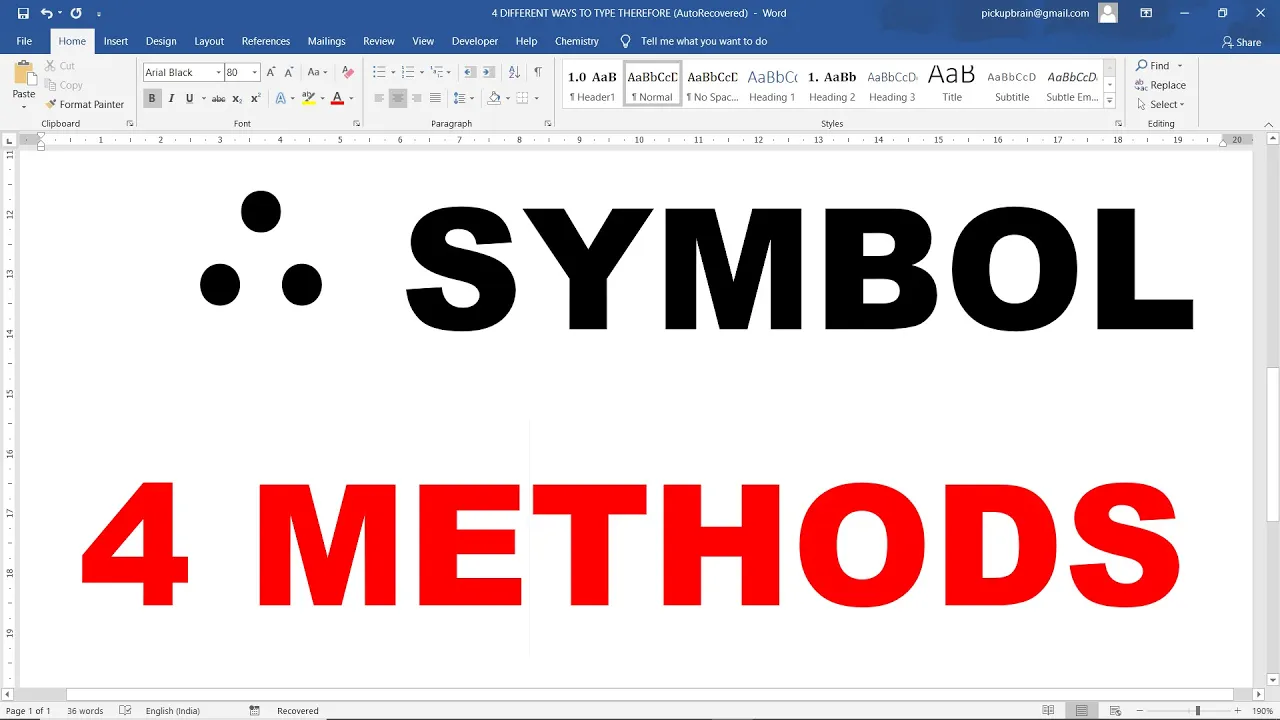
The therefore symbol (∴) is a three-dot mathematical and logical symbol meaning “therefore” or “as a result.” The fastest reliable method in desktop Microsoft Word for Windows is to type 2234 and press Alt+X. You can also insert it from the Symbol menu or use Math AutoCorrect in an equation.

How to insert the therefore symbol in Microsoft Word
Below are four ways to insert ∴ in Word. Choose the Unicode shortcut for ordinary text, or Math AutoCorrect when you are typing equations frequently.
- Method 1 — Symbol menu: Select Insert → Symbol → More Symbols. Choose a font that contains mathematical symbols, such as Segoe UI Symbol, and locate ∴ (Unicode U+2234). Click Insert. You can also copy and paste this symbol: ∴.
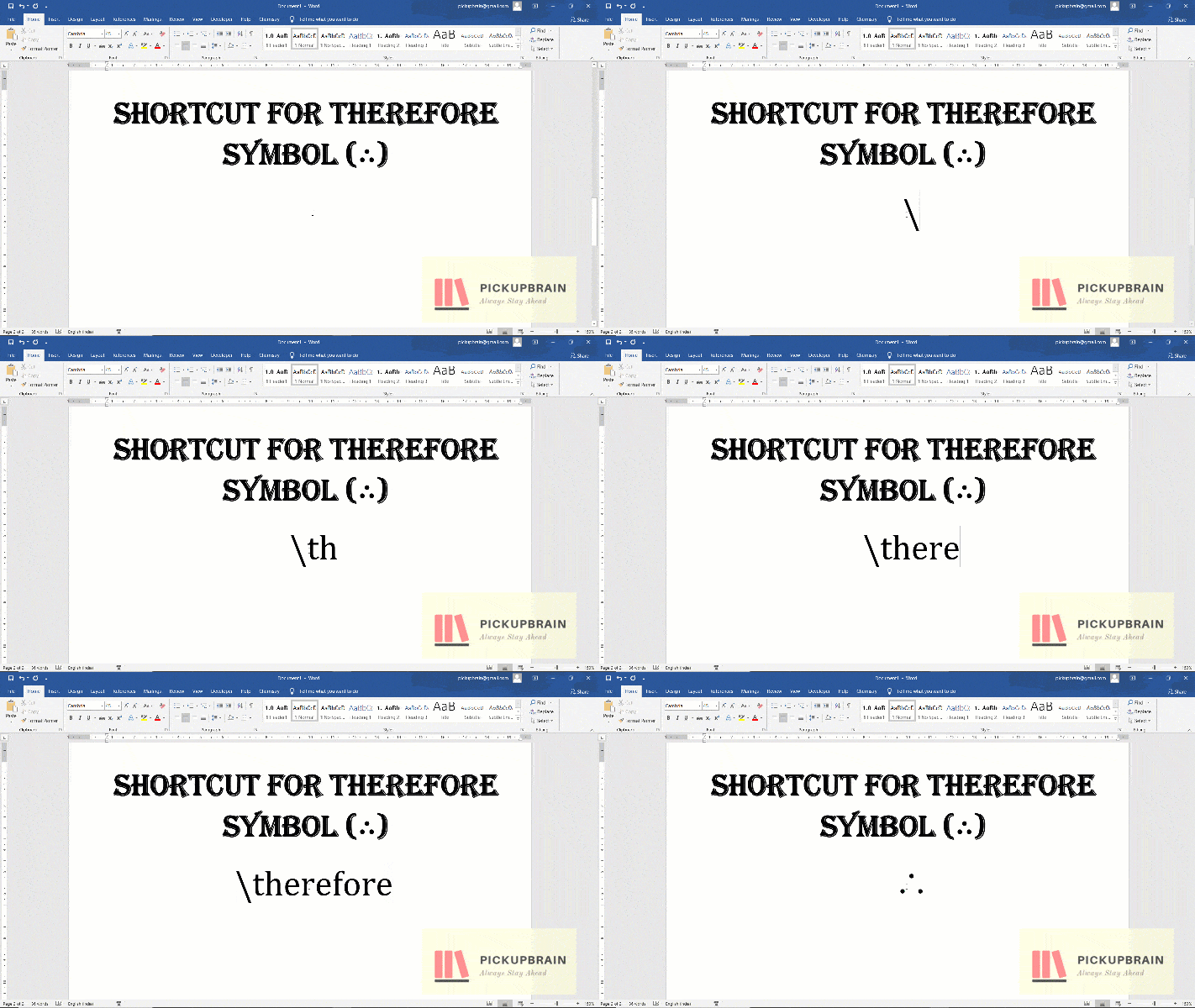
- Method 2 — Math AutoCorrect: Insert an equation with Alt+= in desktop Word for Windows, type
\therefore, then press Space. To use Math AutoCorrect in ordinary text, enable its optional setting as described below. Behavior can vary by Word version and platform. - Method 3 — Copy and paste: Copy ∴ from this page and paste it into Word. This is the simplest cross-platform fallback on Word for Mac, Word for the web, or computers without a numeric keypad. Avoid assuming that holding Alt while typing decimal 8756 works universally: legacy Alt codes depend on Windows input settings and are not a dependable Unicode entry method.
- Method 4 — Unicode conversion (recommended on Windows): Type
2234and press Alt+X. Word converts the hexadecimal Unicode code point U+2234 into ∴. If a letter or digit immediately precedes the code, select only2234before pressing Alt+X.
For additional characters and shortcuts, see our mathematical symbols guide for Word.
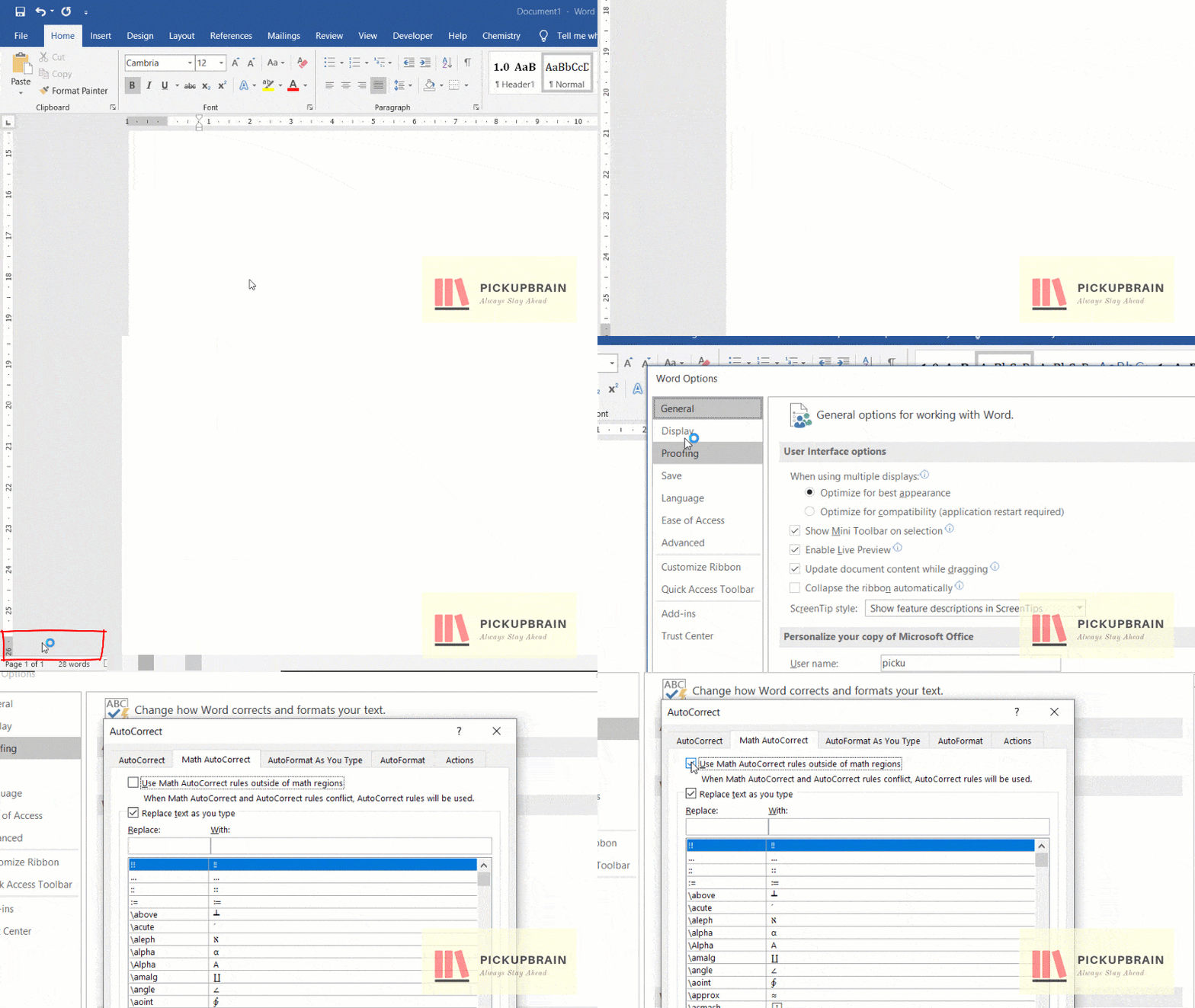
Enable Math AutoCorrect Outside Equation Regions
- In Word for Windows, open File → Options.
- Select Proofing → AutoCorrect Options.
- Open the Math AutoCorrect tab.
- Enable Use Math AutoCorrect rules outside of math regions if that option is available in your Word version.
- Click OK to save the setting and close the dialogs. Test
\thereforefollowed by Space in a new paragraph.
Therefore (∴) vs Because (∵)
These symbols are related but have different meanings. ∴ (therefore, Unicode U+2234) introduces a conclusion, while ∵ (because, Unicode U+2235) introduces a reason. In Word for Windows, type 2235 and press Alt+X to insert ∵.
Troubleshooting the Therefore Shortcut
- Alt+X does nothing: Use desktop Word for Windows, ensure the code is
2234, and select those four characters before converting if needed. - Math AutoCorrect stays as text: Insert an equation first with Alt+=, or check the Math AutoCorrect settings.
- Symbol looks wrong: Choose a font with Unicode mathematical-symbol coverage.
For more symbols, see our Word mathematical symbol shortcut guide.
Frequently asked questions
Can I insert ∴ in Word for Mac or Word for the web?
Yes. Copy and paste ∴, or use the symbol-insertion interface where available. The 2234 + Alt+X sequence described here is specifically a Word for Windows method; do not assume it works identically in every edition.
Does ∴ mean the same thing as ∵?
No. ∴ introduces a conclusion (“therefore”), whereas ∵ introduces a reason (“because”). Both symbols have separate Unicode code points.
Conclusion
To insert the therefore sign, use 2234 + Alt+X in Word for Windows, choose it from Insert → Symbol, or enter \therefore in an equation. If a shortcut does not work, use the Symbol menu or copy ∴ directly.
Other Useful Ms Word Shortcut You May Like

C P Gupta is a YouTuber and Blogger. He is expert in Microsoft Word, Excel and PowerPoint. His YouTube channel @pickupbrain is very popular and has crossed 9.9 Million Views.
THank you! Very helpful!
Welcome dear.