To remove a manual page break in Microsoft Word, show formatting marks using Home > ¶ (Show/Hide) or Ctrl + Shift + 8 in Word for Windows. Select the displayed Page Break marker and press Delete. An automatic page break is different: Word inserts it when a page fills, and you cannot delete it as a character.
Manual vs automatic page breaks: which one do you have?
| What you see | What causes it | Best fix |
|---|---|---|
| Visible “Page Break” marker | Manual page break, often inserted with Ctrl + Enter | Select the marker and press Delete |
| Text moves automatically to a new page | Normal pagination as the page fills | Change content or layout; no removable break exists |
| New page before a heading | Paragraph setting “Page break before” or “Keep with next” | Check Paragraph > Line and Page Breaks |
| Blank or extra page at a section boundary | Next Page / Odd Page / Even Page section break | Inspect section break and section layout before changing it |
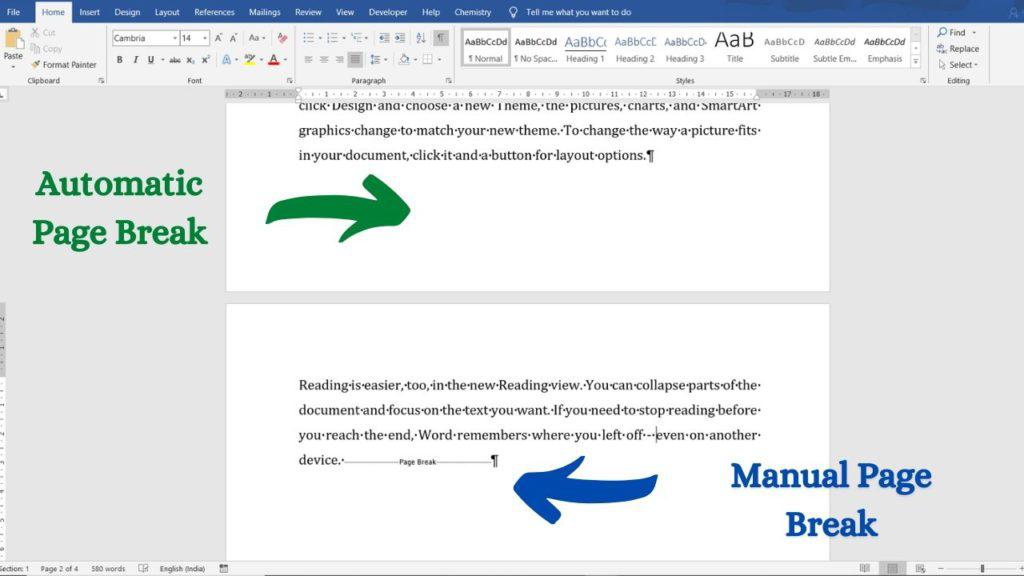
Word uses automatic pagination when text reaches the end of a page. A manual break can be inserted deliberately with Ctrl + Enter in Word for Windows. If the break is caused by a heading style or a section boundary, deleting a page-break marker is not the right solution. Microsoft explains the distinction in its page-break removal guide.
Method 1: Remove one manual page break
- Save a copy of the document if its pagination or chapter layout is important.
- Go to Home > ¶ to show formatting marks. In desktop Word for Windows, the shortcut is Ctrl + Shift + 8 (the 8 on the number row, not a number-pad shortcut).
- Look for a visible Page Break marker. Double-click the marker to select it, or position the cursor immediately before the marker.
- Press Delete. If the cursor is immediately after the marker, Backspace may remove it instead.
- Review the adjacent paragraphs to check that the resulting layout is correct.
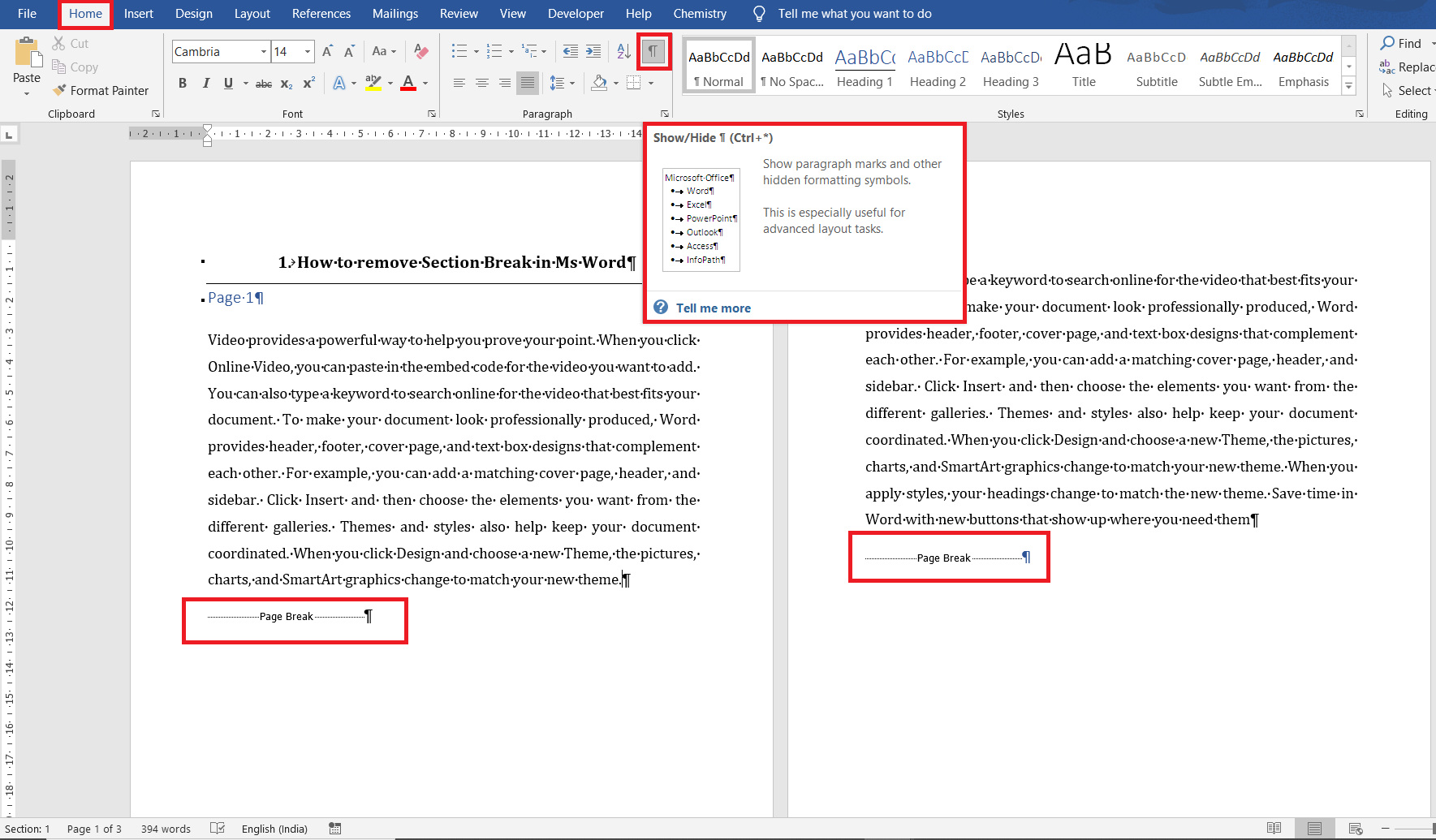
The screenshots and video above were created with an older Word interface. The current principle remains the same: show nonprinting marks, select the manual break and delete it. On a Mac, use the Home ribbon’s ¶ command or the supported formatting-mark shortcut for your version; do not assume Windows shortcuts are identical.
Method 2: Find manual page breaks with Find and Replace
For multiple intentional page breaks, desktop Word’s Find and Replace can locate the special ^m code when Use wildcards is turned off. Review individual occurrences before removing them; removing every break can disrupt reports, chapters and front matter.
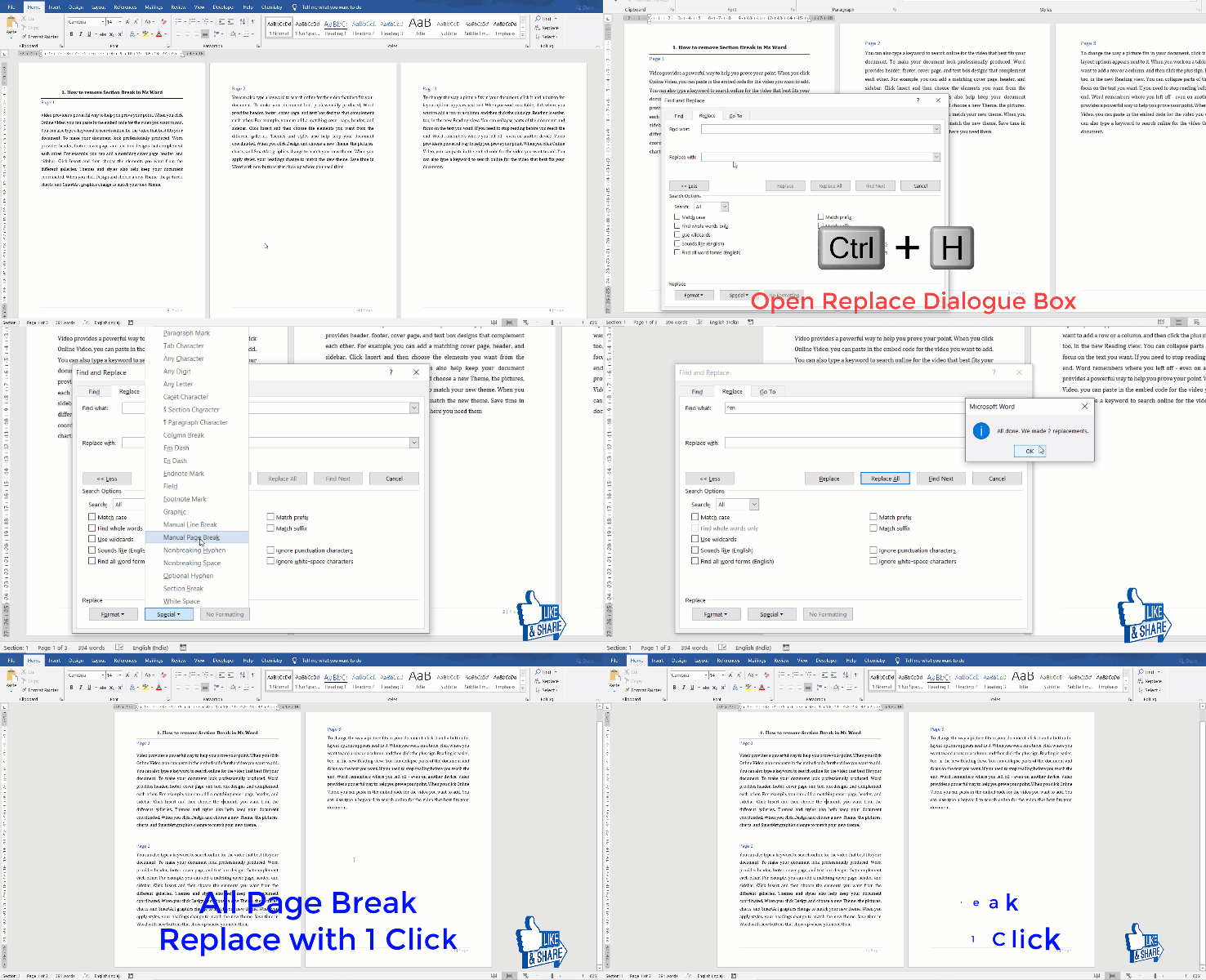
- Open Find and Replace in desktop Word for Windows using Ctrl + H.
- Choose More > Special > Manual Page Break (if the option is available) or type
^min Find what. - Ensure Use wildcards is not selected. With wildcard searching enabled, special character handling can differ and may include section breaks.
- Leave Replace with blank only if you intend to remove the selected break. Start with Find Next and Replace one by one.
- Use Replace All only after making a backup and confirming every targeted manual break should go.

Microsoft’s Find and Replace documentation recommends reviewing individual replacements when possible. ^m is not a universal shortcut across every Word platform or search mode; check the advanced find dialog before applying a bulk change.
What if the page break cannot be deleted?
- The text starts on a new page but there is no “Page Break” marker: this is often automatic pagination or a paragraph setting, not a manual break.
- A heading jumps to the next page: select the heading, open Paragraph > Line and Page Breaks, and check Page break before and Keep with next. These options are useful when intended—do not disable them for every heading indiscriminately.
- A paragraph refuses to split: check Keep lines together and widow/orphan controls.
- There is a “Section Break” marker: deleting a section break can merge section settings, changing headers, page numbering, margins and orientation. Consider changing the section start type instead if the break is still needed.
- The blank page occurs after a table: Word may retain a final paragraph after the table. Inspect formatting marks before deleting content.
Section breaks are not ordinary page breaks
A Next Page, Odd Page or Even Page section break can create an apparent extra page. However, it can also carry different page numbering, landscape orientation, headers and footers, or chapter formatting. Inspect Layout > Breaks and the affected section properties before making a change. See Microsoft’s blank page and section-break guidance.
Frequently asked questions
Can I remove every automatic page break? No. Automatic breaks are a consequence of text flow and document layout. Will deleting a manual break remove text? The break marker is removed, but the surrounding text reflows and may appear on a different page. Can I undo a mistaken bulk replacement? Use Undo immediately where possible, or restore from the saved copy.
Summary
Remove manual breaks by displaying formatting marks and deleting the marker. For multiple breaks, search for ^m with wildcards disabled, and review replacements carefully. For an unexpected page caused by paragraph formatting or section breaks, inspect the relevant settings instead of deleting break markers blindly.
Other posts you may like

C P Gupta is a YouTuber and Blogger. He is expert in Microsoft Word, Excel and PowerPoint. His YouTube channel @pickupbrain is very popular and has crossed 9.9 Million Views.