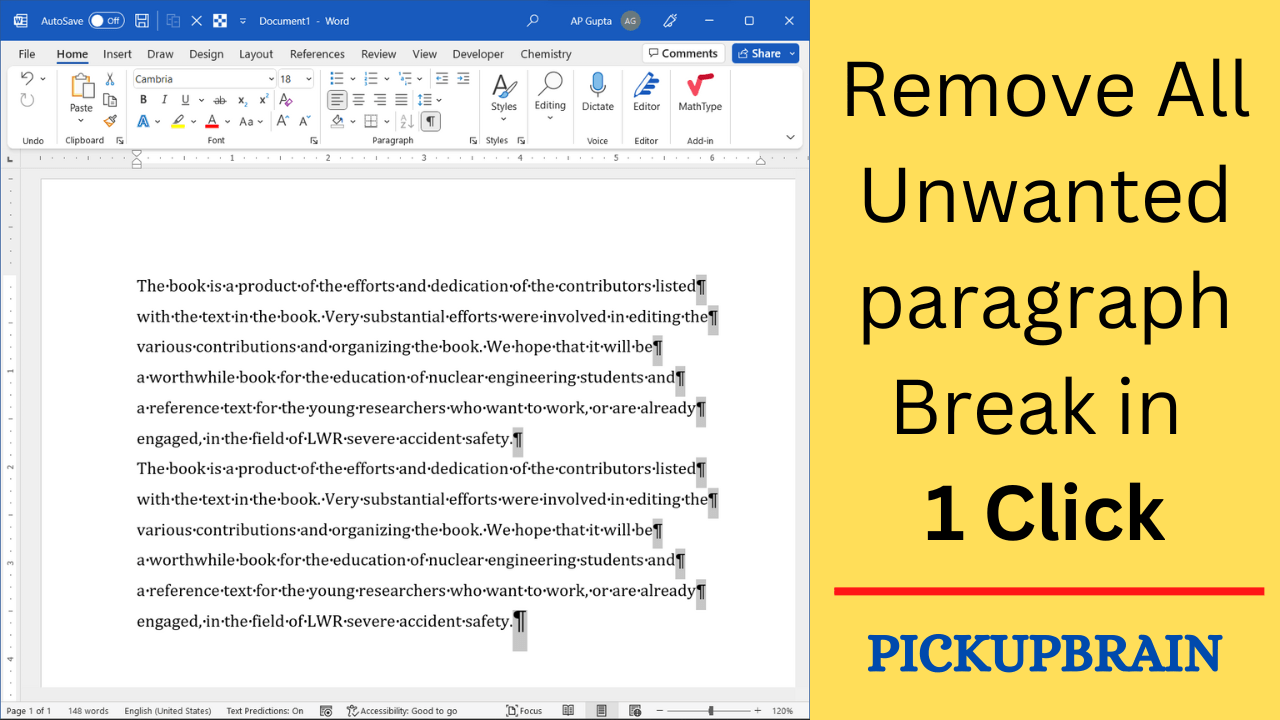
When you copy text from a PDF, website, or email into Microsoft Word, it may contain unwanted line breaks after every visible line. These hard breaks can make sentences look choppy, interfere with formatting, or prevent text from flowing correctly when you resize the page. The safest first solution is usually Word’s built-in Find and Replace; you do not need a macro just to remove manual line breaks. For recurring tasks, this guide also preserves the original one-click macro workflow.
First, find out which type of break is in your document
Turn on formatting marks with the Home > ¶ (Show/Hide) button. On Word for Windows, the keyboard shortcut is Ctrl + Shift + 8; on Mac it is commonly Command + 8. You may see different symbols at the end of a line:
| Formatting mark you see | Meaning | Find what | Typical action |
|---|---|---|---|
| ↵ | Manual line break (Shift + Enter) | ^l (lowercase L) | Replace with a space if it splits one intended paragraph |
| ¶ | Paragraph mark (Enter) | ^p | Replace only the unwanted marks, not genuine paragraphs |
| ¶¶ | Blank paragraph between text blocks | ^p^p | Replace with ^p to reduce extra blank paragraphs, if appropriate |
Important: A line wrapping naturally at the right margin is not a hard line break and requires no cleanup. A manual break (↵) or paragraph mark (¶) embedded between words is an actual character. Select a small affected passage first and inspect it before replacing anything.
Method 1: Remove unwanted manual line breaks without a macro
- Make a copy of the document, or paste the affected text into a separate temporary document so you can undo errors safely.
- Select the text containing the unwanted line breaks. If you are working on the whole file, inspect it first to ensure there are no intentional manual breaks you need to keep.
- Open Find and Replace. In Word for Windows, press Ctrl + H or choose Home > Replace. On a Mac, use the Find and Replace controls in Word’s menu or search interface.
- In Find what, enter
^l(caret and lowercase L). In Replace with, enter one ordinary space. - Use Find Next > Replace to review a few results. Only choose Replace All when you are certain the selected material is safe to change.
- Read the resulting paragraphs and correct any words that were split across the original line break, such as hyphenated words copied from a PDF.
If Word’s interface does not allow the special code directly, open the advanced Find and Replace dialog and choose Special > Manual Line Break. Microsoft documents finding special characters in its Word Find and Replace guide.
Method 2: Remove paragraph breaks that split a single paragraph
Text imported from a PDF sometimes contains a paragraph mark (¶) after each visual line, even though the lines should form a single paragraph. You can replace these marks with spaces, but never blindly replace every ^p in a complete document: doing so can collapse headings, lists, captions, real paragraphs, and page layouts into one long text block.
- Work on a copy or on a small selection containing only the problem text.
- Turn on ¶ marks and identify where a paragraph really should end.
- Open Find and Replace and enter
^pin Find what. Enter a single space in Replace with. - Review individual matches with Find Next and Replace, avoiding real paragraph endings. If you use Replace All on a carefully isolated selection, confirm that Word’s search remains within that selection.
- Recreate any missing intentional paragraphs and verify punctuation, spacing, headings, and list structure.
For an extra blank line where there are two consecutive paragraph marks, try replacing ^p^p with ^p instead. This removes redundant empty paragraphs but preserves paragraph boundaries. It is a different task from joining PDF-wrapped lines.
Before and after: an example
Before: “This paragraph was copied from a PDF” followed by a forced break, then “and does not wrap naturally in Word.”
After: “This paragraph was copied from a PDF and does not wrap naturally in Word.”
Notice that we replaced the unwanted break with a space, not an empty string. Otherwise the words on either side could become joined. However, when a source PDF splits a word with a hyphen at the line ending, a manual review is still needed to reconstruct the original word correctly.
Method 3: Keep the original one-click VBA macro for repeated jobs
If you regularly process long pasted documents, a VBA macro assigned to a Quick Access Toolbar button can save time. The original PickupBrain method below is retained for readers who use it. Only run a macro from a trusted source after reviewing its code; a macro that deletes paragraph breaks can remove meaningful structure. Back up your file and test on sample text first.
Step 1: Enable the Developer tab in Word for Windows
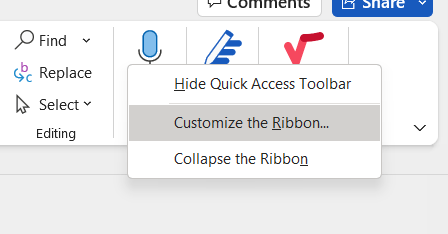
- Right-click the ribbon and choose Customize the Ribbon.

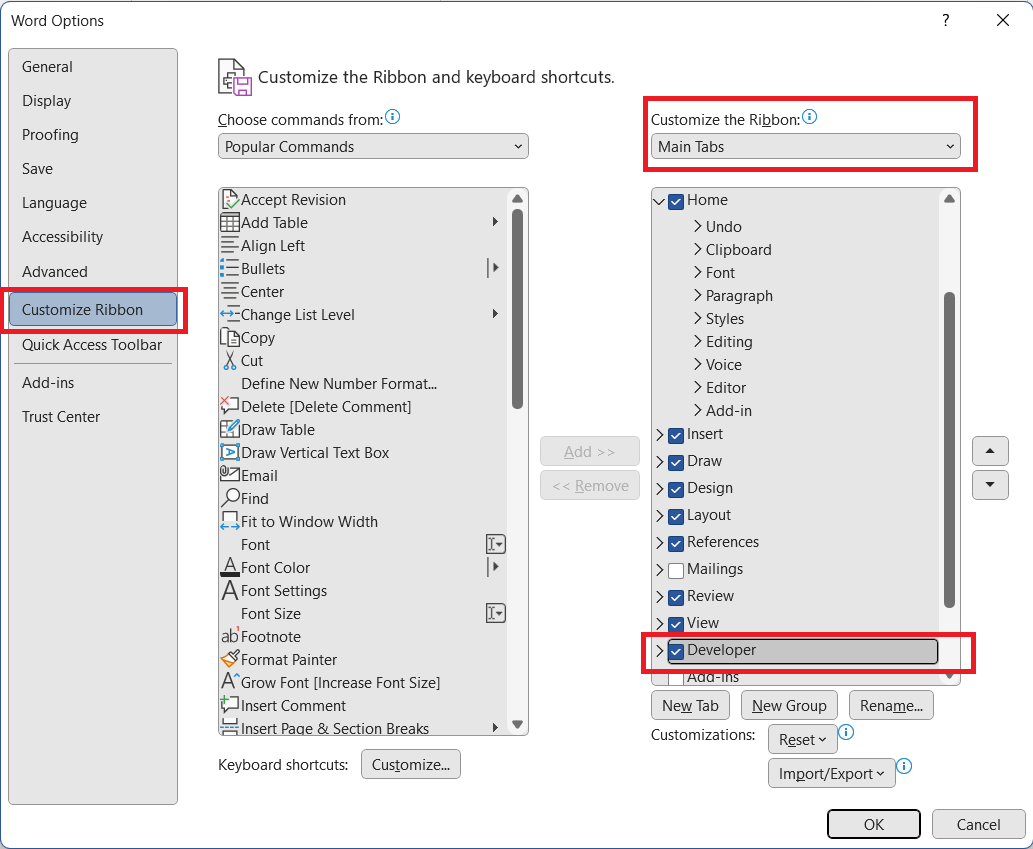
- Under the main tabs, enable Developer, then click OK.

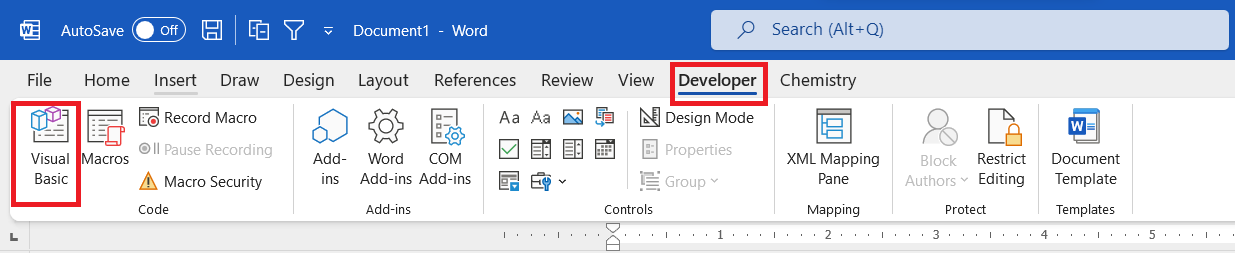
- Open Developer > Visual Basic to work with VBA procedures.

Step 2: Add the newline-cleanup macro
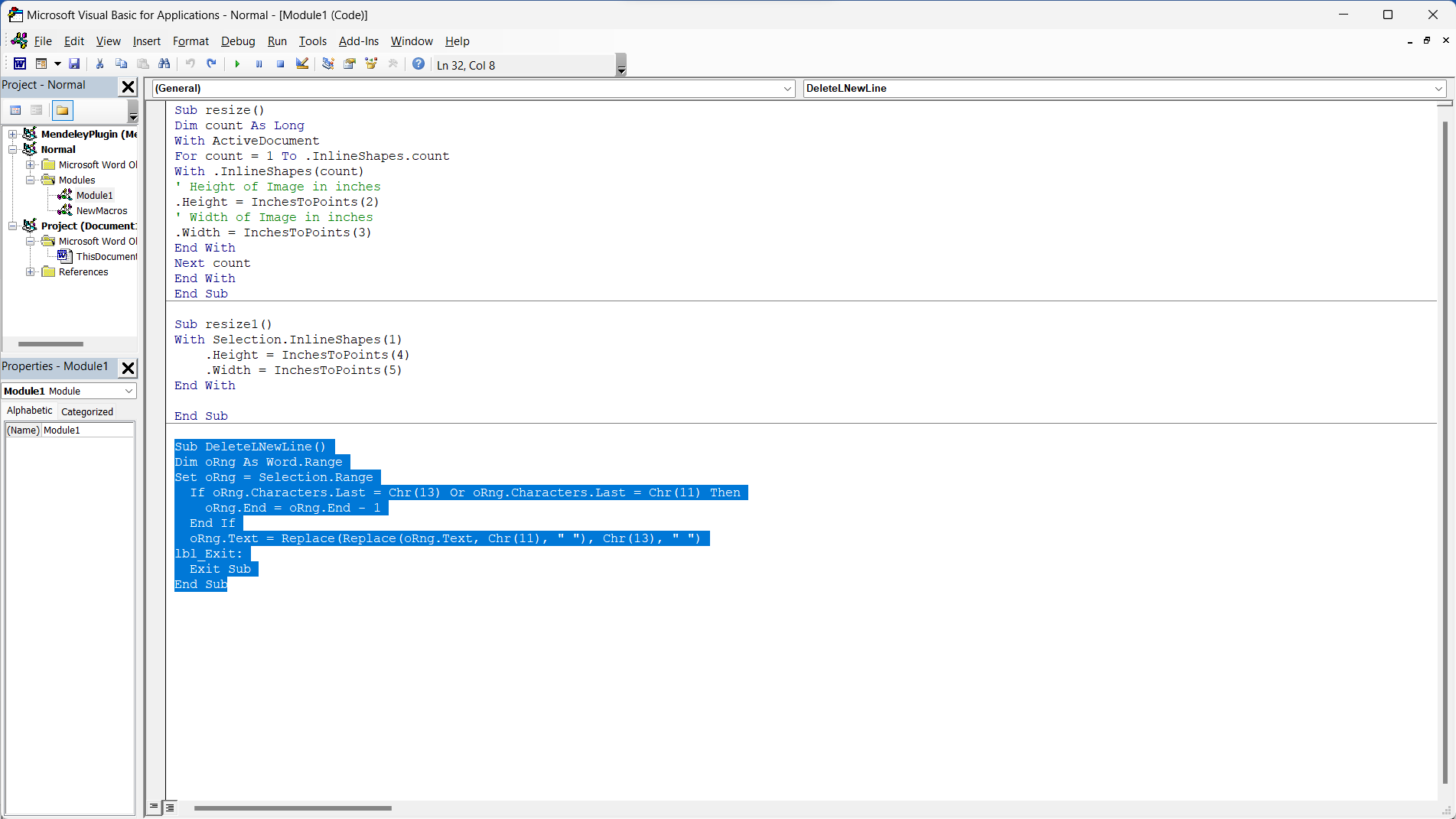
- Open or create a VBA module and review the macro before inserting it. The original code and its explanation are available in our delete paragraph marks using a Word macro tutorial.
- Paste the reviewed VBA procedure into the appropriate module, save it, and close the editor.

- If you store VBA inside a document, save it as a macro-enabled .docm file. A regular .docx document cannot retain VBA code. If you store the macro in your global Word template, its availability and security restrictions may differ.
Step 3: Add the macro to the Quick Access Toolbar
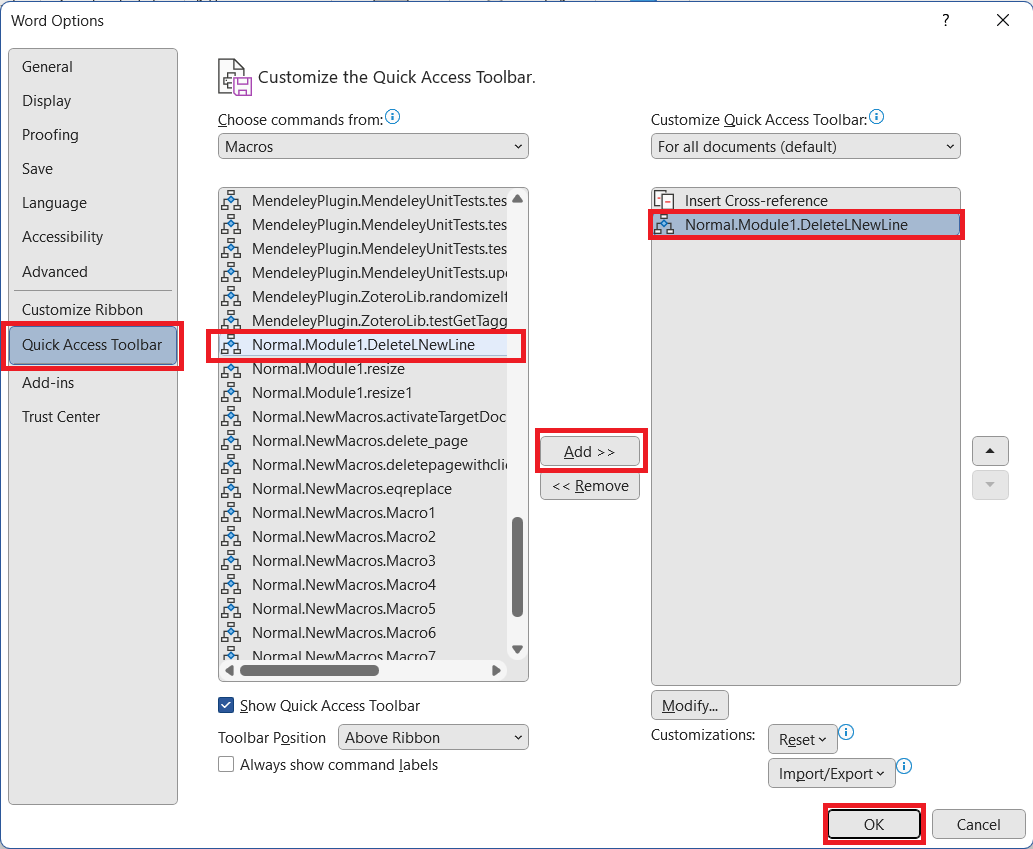
- In Word for Windows, open File > Options > Quick Access Toolbar. Choose Macros from the available commands and add your reviewed cleanup macro.

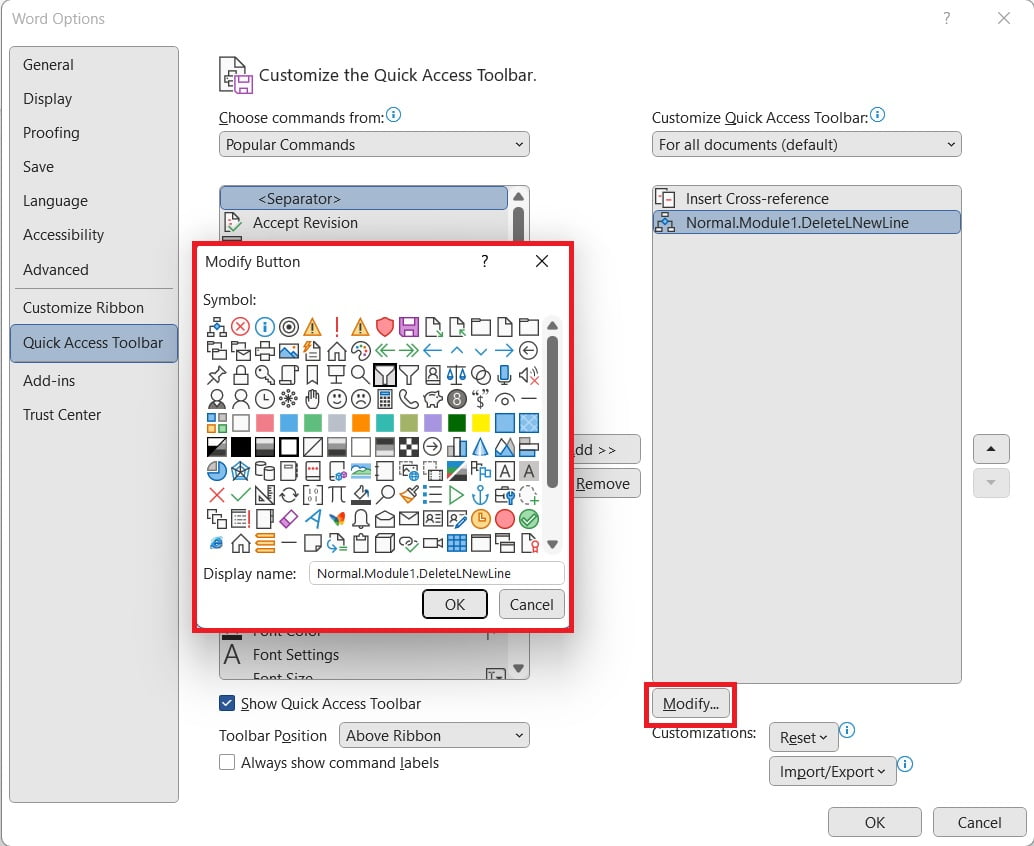
- If you want a recognizable icon, select the macro in the Quick Access Toolbar list, choose Modify, and pick an icon.

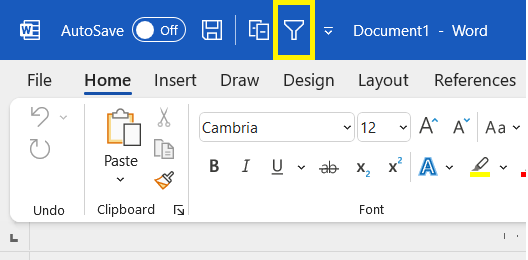
- Click OK. Your macro button should now appear in the Quick Access Toolbar.

Step 4: Run it carefully
- Save a backup and select only the text you intend to clean.
- Click the Quick Access Toolbar macro button to run your macro, provided macros are enabled by your Word security settings.
- Inspect the result before saving: check intentional paragraph boundaries, list items, section formatting, and hyphenated words. Do not assume all line breaks were unwanted.
Video walkthrough of the original macro workflow
The videos demonstrate the original workflow. The screenshots and video may show an older version of Word; command labels and ribbon positions can vary. Use the Find and Replace method above when you do not need a macro.
Troubleshooting
^lfinds nothing: turn on Show/Hide; the document may contain paragraph marks (^p) instead of manual line breaks.- Entire document becomes one paragraph: you likely replaced genuine paragraph marks. Undo immediately if possible, or restore your backup and replace only the problematic region.
- Words run together: replace breaks with a space rather than an empty replacement, except where a hyphenated word requires manual reconstruction.
- Replace All affects too much: use a separate document or smaller selected passage. Review changes before applying them broadly.
- Macro does not run: Word for the web does not execute traditional VBA macros. In desktop Word, organization security policies may block macros; do not disable protections simply to follow a tutorial.
- Extra empty paragraphs remain: if appropriate, replace
^p^pwith^p, checking whether the original blank lines are intentional.
Frequently asked questions
To remove unwanted PDF line breaks in Word, first identify whether you are dealing with a manual line break (^l) or a paragraph mark (^p). Use Find and Replace on a small area before making large changes. For frequent cleanup tasks, a reviewed VBA macro can help, but it should not indiscriminately delete all paragraph breaks from an important document.
A safer PDF-to-Word cleanup checklist
- Test a small sample: copy two paragraphs from the PDF, display formatting marks and identify whether the unwanted separator is ↵ or ¶.
- Preserve structure: keep real headings, bullet lists, tables, citations, page numbers and captions separate; replacing every paragraph mark across the document is not a safe shortcut.
- Check hyphenation: a PDF may wrap re- and search across lines. Replacing a break with a space yields re- search, which still needs manual correction.
- Verify after cleanup: compare a paragraph against the original PDF, check spaces after punctuation and confirm the Word document’s headings remain navigable using the Navigation Pane.
Word for the web: its Find and Replace options can differ from desktop Word, especially for special-character searches and VBA. If the required ^l or ^p replacement is unavailable in your web interface, open the file in desktop Word rather than attempting a broad text replacement.
Summary
Use ^l for manual line breaks and ^p for paragraph marks. Check the formatting marks first, work on a copy, and review each replacement before using Replace All. Keep real paragraph boundaries, headings, lists, and citations intact.
Related Posts

C P Gupta is a YouTuber and Blogger. He is expert in Microsoft Word, Excel and PowerPoint. His YouTube channel @pickupbrain is very popular and has crossed 9.9 Million Views.
This was exactly what I needed, thank you so much for this!
Welcome dear. Glad to know it was useful.
It works and is so helpful! Thank you for creating this macro and explaining the process of implementing it in such details!
Welcome dear. Glad to know you liked it.
This is amazing! It is saving me so much time when copying from pdf files, thanks a lot:)
Yes!! This trick saves lot of time!