Skip to content
Word shortcut to move row up and down

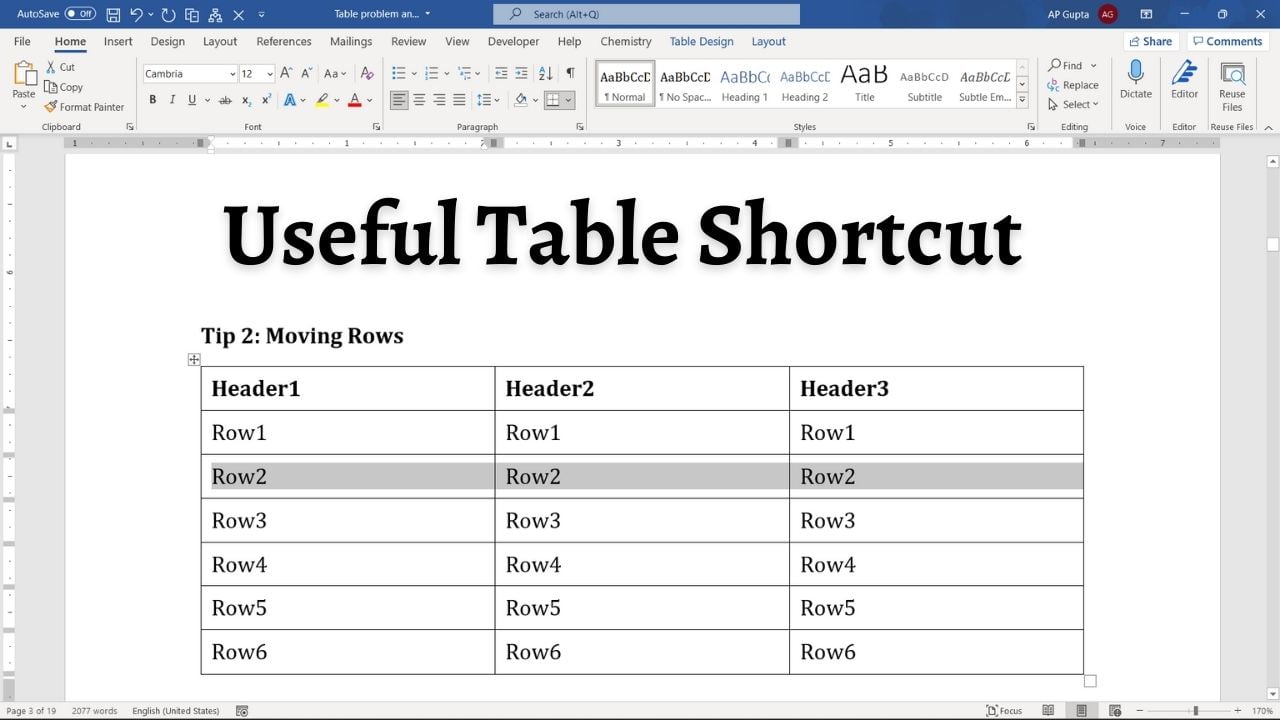
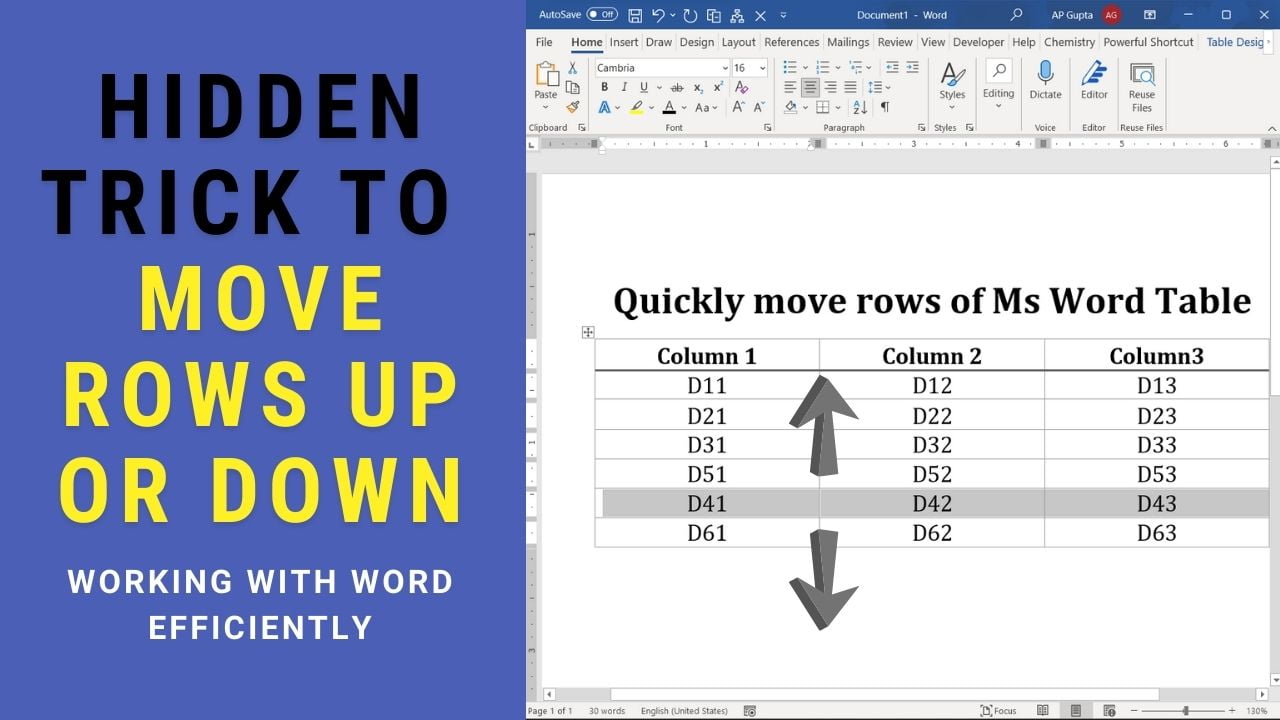
Quick answer: To move a table row in desktop Microsoft Word for Windows, click in the row and press Alt+Shift+Up Arrow or Alt+Shift+Down Arrow. Select adjacent rows first to move them together. This is faster than cutting and pasting, but test the shortcut on a copy if the table contains merged cells or complex formatting. How to Move a Table Row Up or Down in Word Position the cursor in… Read More »How to Move Table Rows Up or Down in Word (Keyboard Shortcut)
How to Move Table Rows Up or Down in Word (Keyboard Shortcut)
  • by
autofit word table

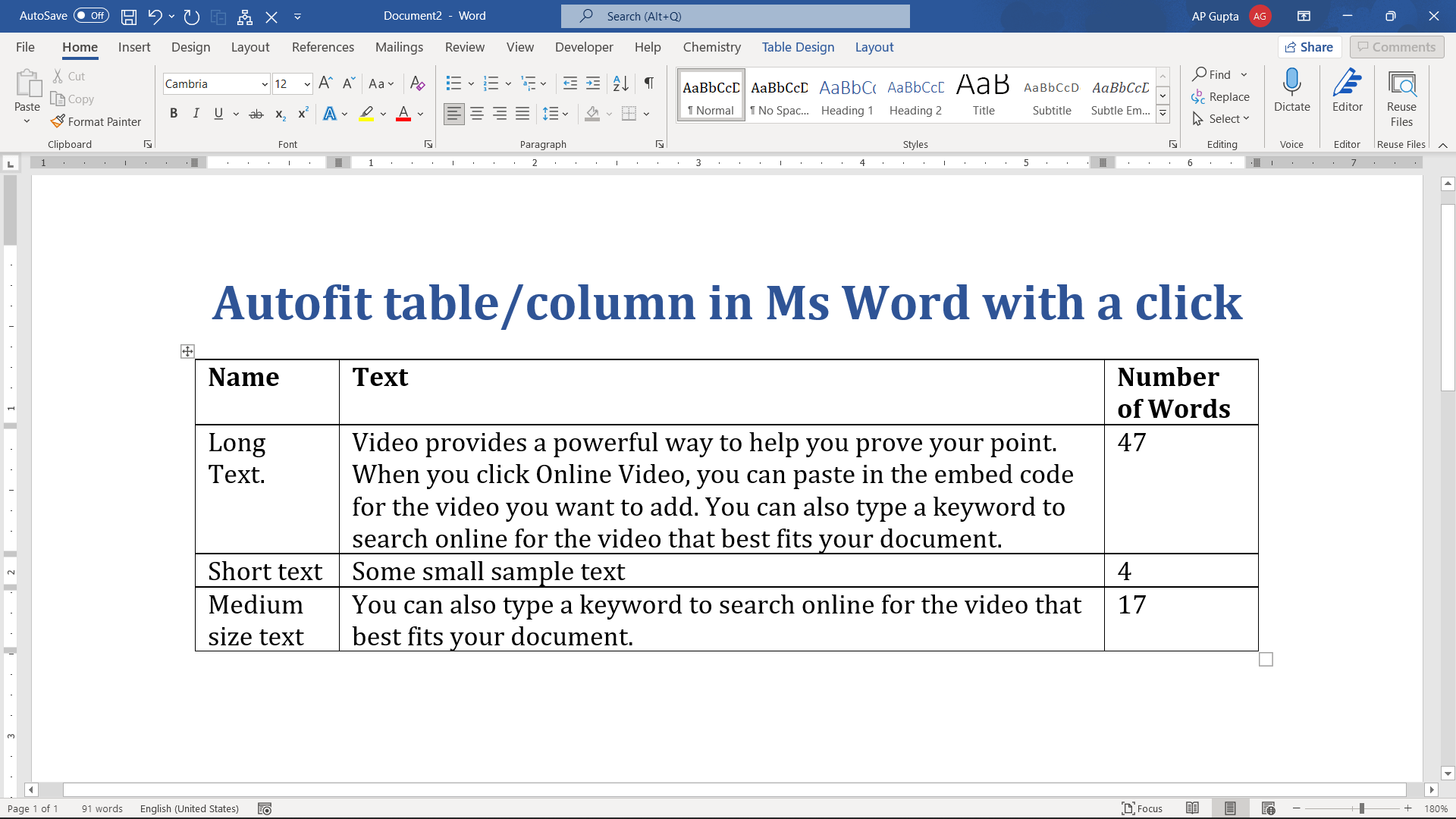
Quick answer: To automatically size a Word table, click inside it, open Table Layout → AutoFit, then choose AutoFit Contents, AutoFit Window or Fixed Column Width. AutoFit Contents responds to cell content; AutoFit Window fits the table within the available page width. AutoFit Contents: resize columns around cell content Choose this option when you want Word to adjust column widths around text and objects in cells. Long words and large… Read More »AutoFit a Table in Word: Fit Contents, Window or Fixed Width

AutoFit a Table in Word: Fit Contents, Window or Fixed Width

  • by
Make excel available for all workbooks

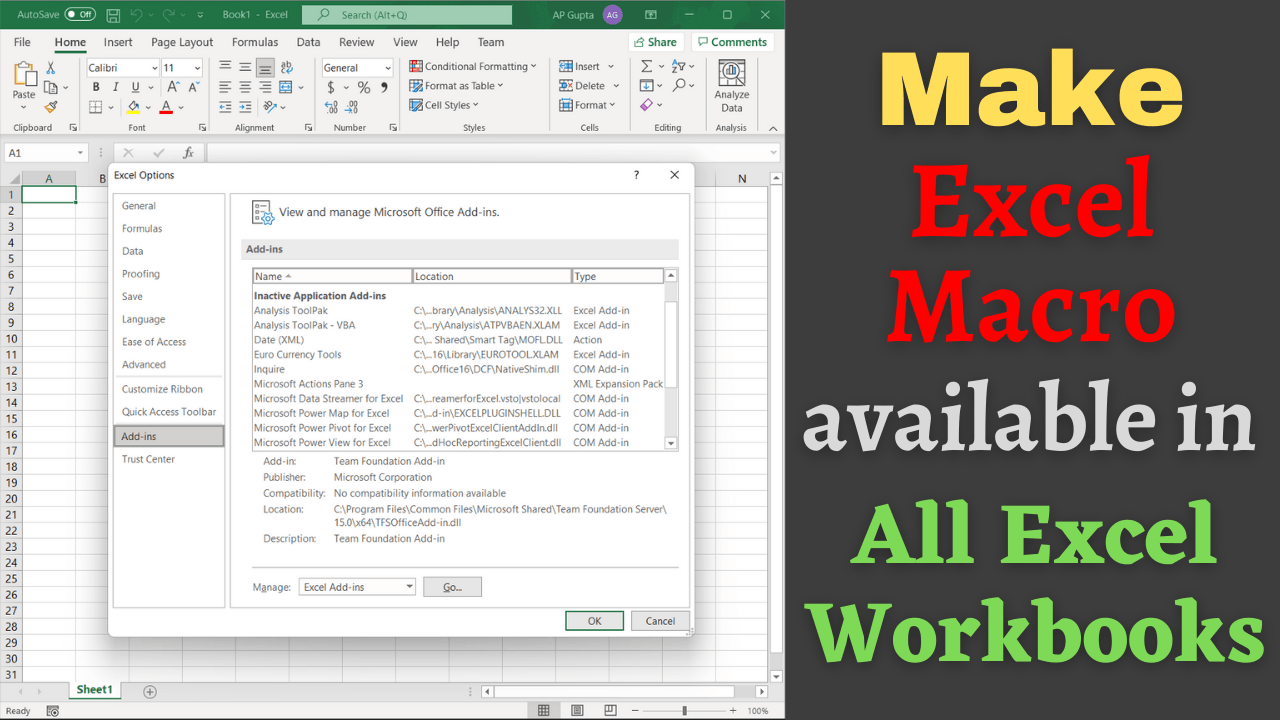
Quick answer: To run your own VBA macros in any workbook in desktop Excel, save them in the hidden Personal Macro Workbook (PERSONAL.XLSB). To install reusable functions or procedures as a separate component, create and enable an Excel add-in (.xlam). Neither option makes VBA run in Excel for the web. By default, a macro stored in an ordinary .xlsm workbook is available while that workbook is open. For repeated use… Read More »Make an Excel Macro Available in Every Workbook

Make an Excel Macro Available in Every Workbook

  • by
Constraints in SQL

PostgreSQL constraints keep invalid data out of your tables. This guide explains NOT NULL, UNIQUE, PRIMARY KEY, FOREIGN KEY, CHECK and DEFAULT with runnable PostgreSQL examples, plus ways to inspect and remove constraints. What are constraints in PostgreSQL? A constraint is a rule that PostgreSQL checks when data is inserted or changed. Violations usually cause the statement to fail rather than silently storing inconsistent data. Constraints are useful alongside application… Read More »PostgreSQL Constraints Explained: PRIMARY KEY, FOREIGN KEY and CHECK

PostgreSQL Constraints Explained: PRIMARY KEY, FOREIGN KEY and CHECK

  • by
Ms Word shortcut for working with table

Quick answer: This reference lists practical shortcuts for navigating and editing tables in desktop Microsoft Word. Common commands include Tab to move to the next cell, Shift+Tab to move to the previous cell, and Alt+Shift+Up/Down Arrow on Windows to move a row. Shortcut behavior can differ by operating system, keyboard layout and Word version. Note: In this table, a plus sign (+) means press keys together; a comma means press… Read More »Microsoft Word Table Keyboard Shortcuts for Windows and Mac

Microsoft Word Table Keyboard Shortcuts for Windows and Mac

Array in Python

Quick answer: Python’s array.array stores a resizable sequence of values represented by one type code. Use it for compact, homogeneous primitive values; use a list for general-purpose Python objects, or a NumPy array for vectorized numerical calculations. Below are runnable examples of indexing, inserting, deleting, and extending arrays. What Is an Array in Python? The standard-library array module provides typed arrays. Elements are accessed by zero-based indexes: for five elements,… Read More »Python Arrays Explained: array.array vs Lists and NumPy

Python Arrays Explained: array.array vs Lists and NumPy

  • by
Useful Ms Word shortcut

Quick answer: Save time in Microsoft Word with keyboard shortcuts for editing, formatting and navigation. Ctrl+C / Command+C copies, Ctrl+V / Command+V pastes, Ctrl+Z / Command+Z undoes, and Ctrl+S / Command+S saves. The complete reference below compares Windows and Mac commands; some shortcuts are platform-specific. Most useful Microsoft Word keyboard shortcuts Many basic Mac shortcuts use Command where Windows uses Ctrl, but this is not a universal rule. Check the… Read More »Essential Microsoft Word Keyboard Shortcuts (Windows and Mac)

Essential Microsoft Word Keyboard Shortcuts (Windows and Mac)

  • by
How to get rid of paragraph mark in word

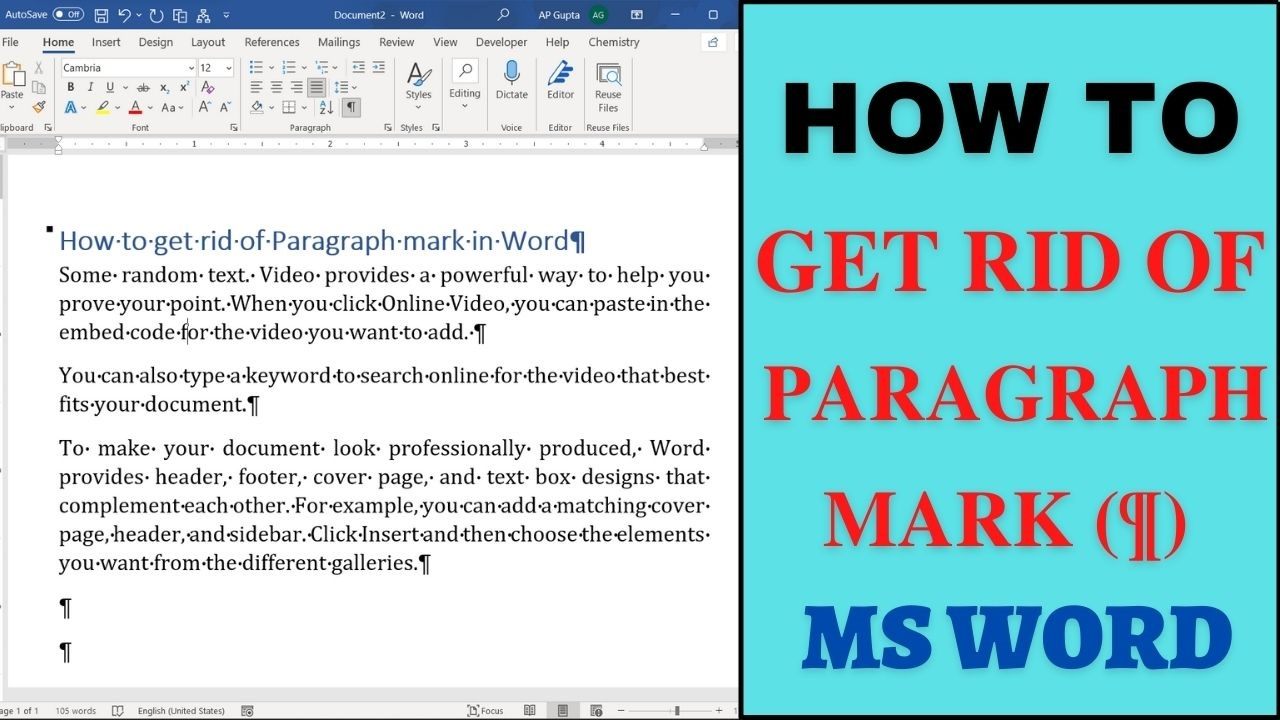
Quick answer: To hide paragraph marks (¶), spaces shown as dots, and other nonprinting formatting symbols in desktop Microsoft Word, go to Home → ¶ (Show/Hide). In Word for Windows, you can also press Ctrl+Shift+8. These marks help troubleshoot document layout, but they normally do not appear in printed documents. There are two settings to check: the Show/Hide button and the Word options that force particular formatting marks to remain… Read More »How to Hide Paragraph Marks (¶) and Formatting Symbols in Word

How to Hide Paragraph Marks (¶) and Formatting Symbols in Word

  • by
How to count words in Google Docs

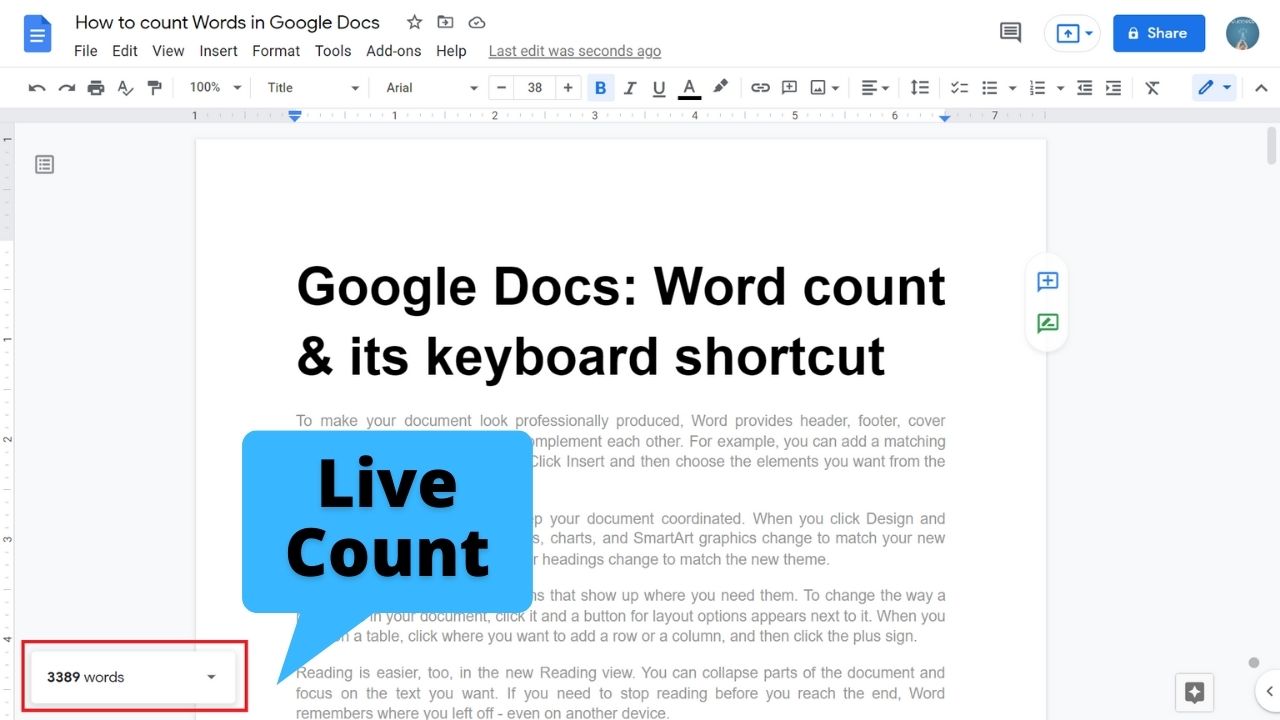
Quick answer: To check word count in Google Docs on a computer, choose Tools → Word count or press Ctrl+Shift+C on Windows/ChromeOS or Command+Shift+C on Mac. The dialog displays words, pages and characters. You can also enable Display word count while typing to keep a running count on screen. How to Check Word Count in Google Docs 1. Open your document in a desktop browser. Choose Tools → Word count… Read More »How to Check Word Count in Google Docs (Live Count and Shortcut)

How to Check Word Count in Google Docs (Live Count and Shortcut)

  • by