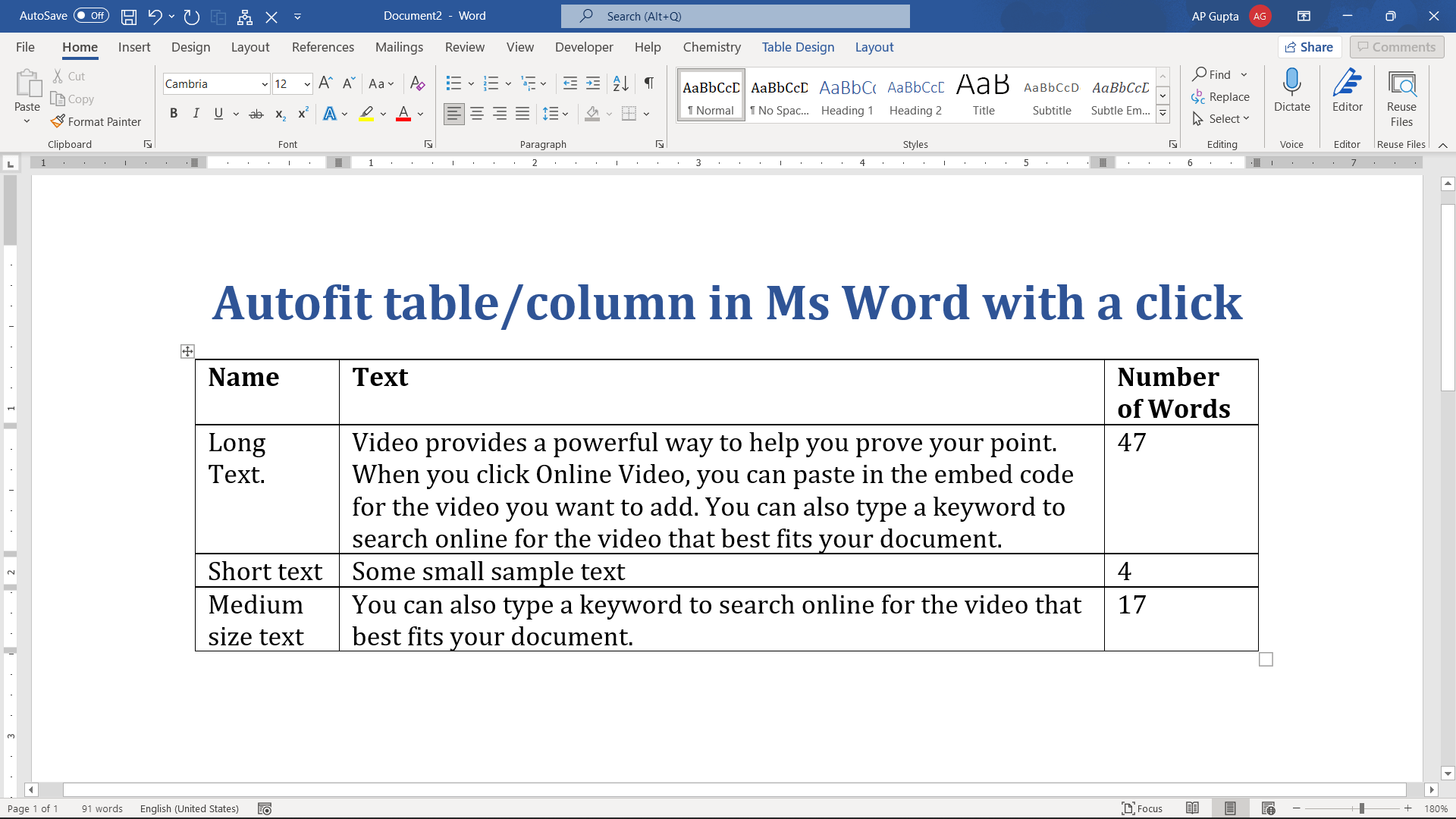
Quick answer: To automatically size a Word table, click inside it, open Table Layout → AutoFit, then choose AutoFit Contents, AutoFit Window or Fixed Column Width. AutoFit Contents responds to cell content; AutoFit Window fits the table within the available page width.
AutoFit Contents: resize columns around cell content
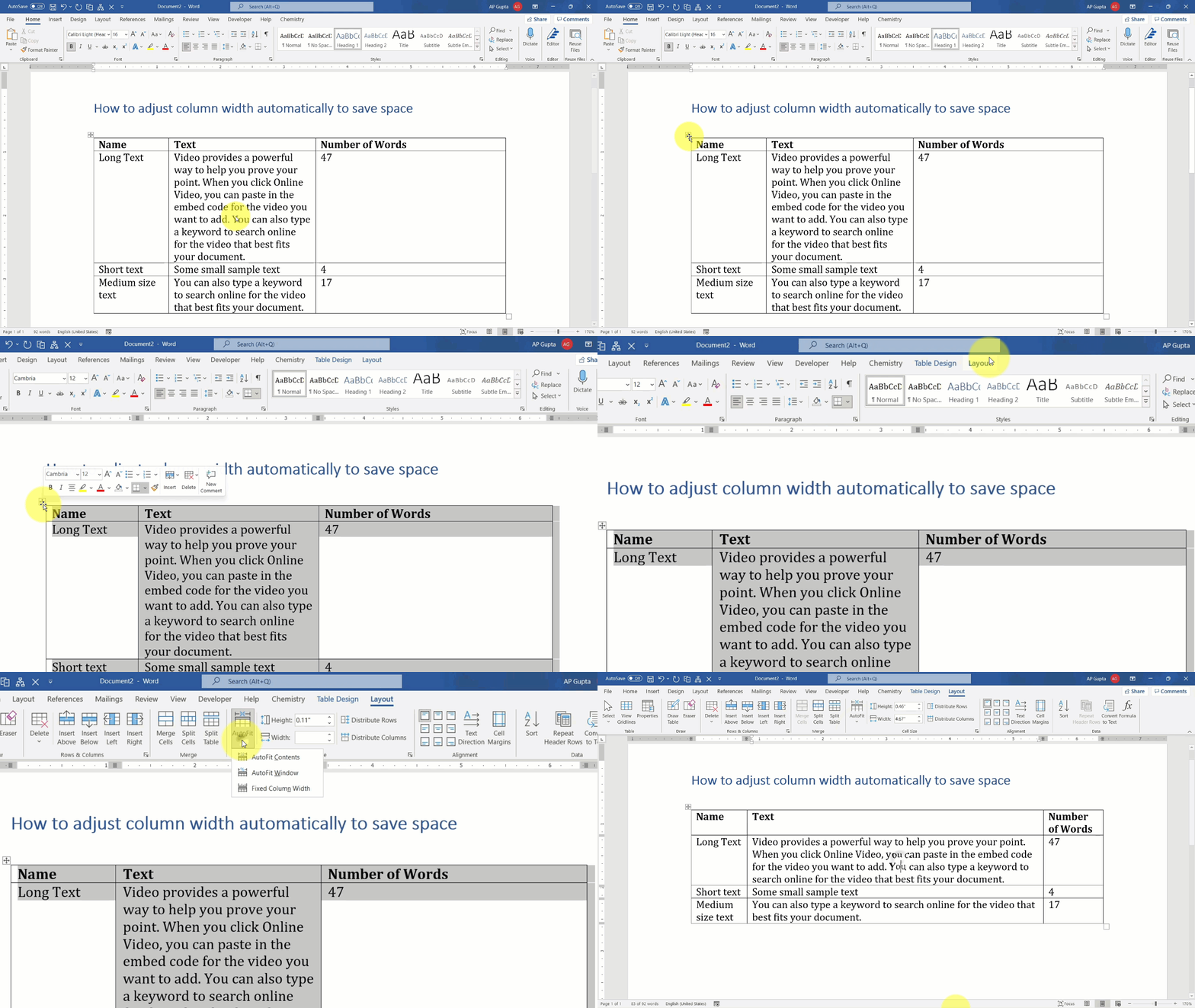
Choose this option when you want Word to adjust column widths around text and objects in cells. Long words and large pictures may still make the table too wide.
- Select the entire table
- Go to Layout > AutoFit and select “AutoFit Contents”
Word recalculates column widths around content; this does not guarantee the smallest table or equal-width columns.
AutoFit Window: fit the table between page margins
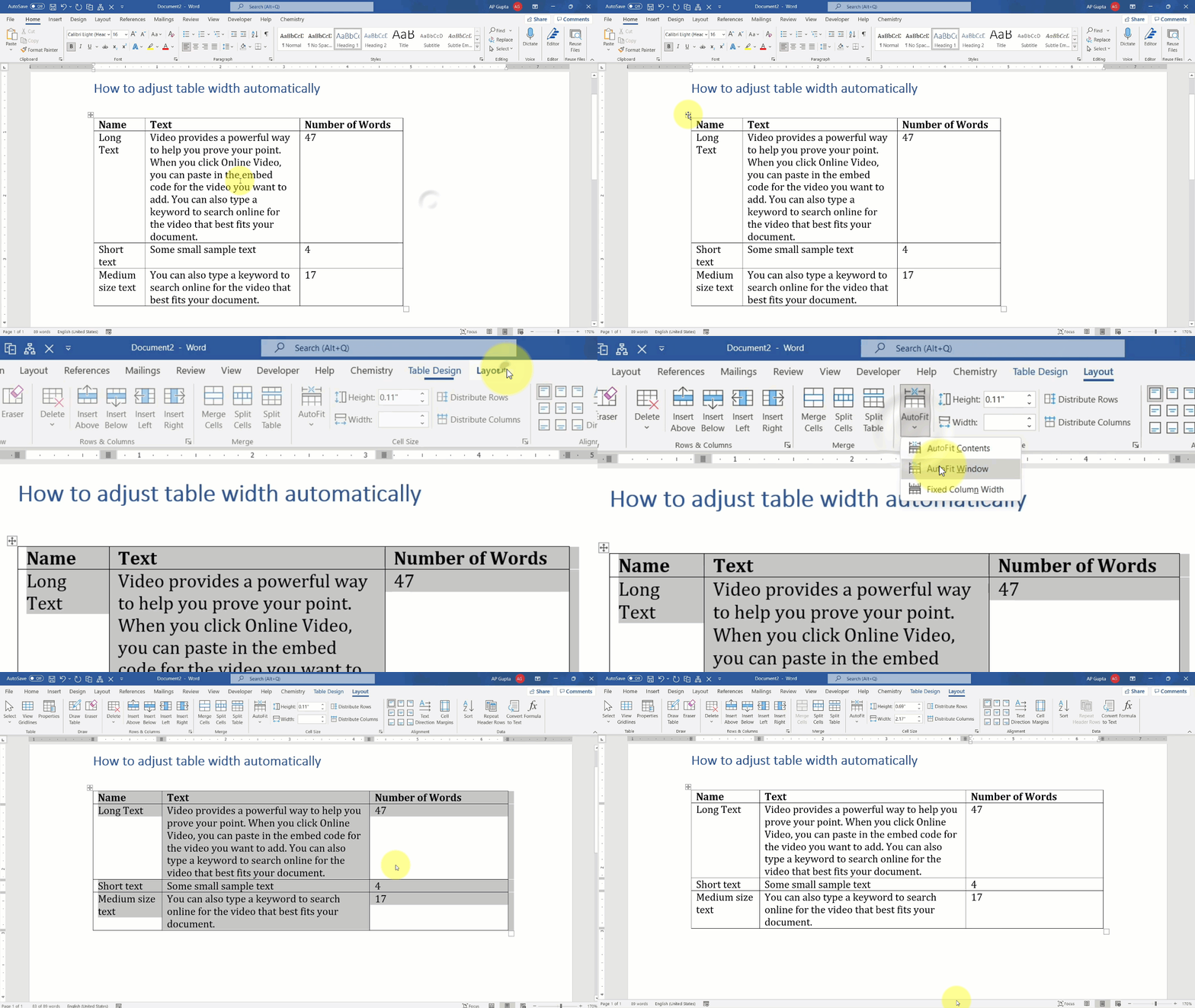
Use AutoFit Window when a table extends beyond the margins. This fits the table to the available text area, not the physical edge of the paper.
- Select the entire table
- Go to Layout > AutoFit and select “AutoFit Window”
Fixed Column Width: stop automatic resizing
Click in the table, select Table Layout → AutoFit → Fixed Column Width, and then set widths using Table Layout → Cell Size or the table’s column boundaries. This switches off automatic resizing as you type; it does not force long text to stay on one line or prevent overflow caused by unusually large objects. To set a preferred overall table width, open Table Properties → Table and review the preferred-width and text-wrapping settings.
AutoFit Contents vs. AutoFit Window
AutoFit Contents sizes columns based on their content, subject to the table layout and page width. AutoFit Window adjusts the table to fit the available width between page margins. Fixed Column Width prevents Word from continually resizing columns to accommodate text.
When AutoFit appears not to work
Check whether the table is floating. Right-click the table, choose Table Properties → Table, and inspect Text wrapping. A table positioned Around can behave differently from an inline table set to None; make a copy before changing positioning in a complex document. Also check cell margins under Table Properties → Cell → Options where available: excessive padding reduces the space available for text.
Troubleshooting a Table That Is Too Wide
Long unbroken strings, large images, narrow margins and merged cells can keep a table from fitting neatly. Resize images or allow text wrapping, check page margins, and consider landscape orientation for genuinely wide tables.
Accessibility and layout tips
Use a real Word table for tabular data, not a grid of spaces or text boxes. Mark the first row as a repeating header row when a table spans pages (Table Layout → Repeat Header Rows), avoid unnecessary merged cells, and check the reading order after making major layout changes. AutoFit changes column widths; it does not automatically make a complex table accessible.
Frequently Asked Questions
Does AutoFit make columns equal? No. Select the table and choose Table Layout → Distribute Columns for even widths.
Can I resize one column? Drag its boundary or enter a width under Table Layout → Cell Size.
Why does my table resize as I type? AutoFit Contents responds to new content. Choose Fixed Column Width for more stable widths and check text wrapping.
Does Word for the web support AutoFit? Available table controls vary. Open the document in desktop Word if the AutoFit command is missing.
If a table still exceeds the printable area, see how to bring a Word table inside page margins.

C P Gupta is a YouTuber and Blogger. He is expert in Microsoft Word, Excel and PowerPoint. His YouTube channel @pickupbrain is very popular and has crossed 9.9 Million Views.