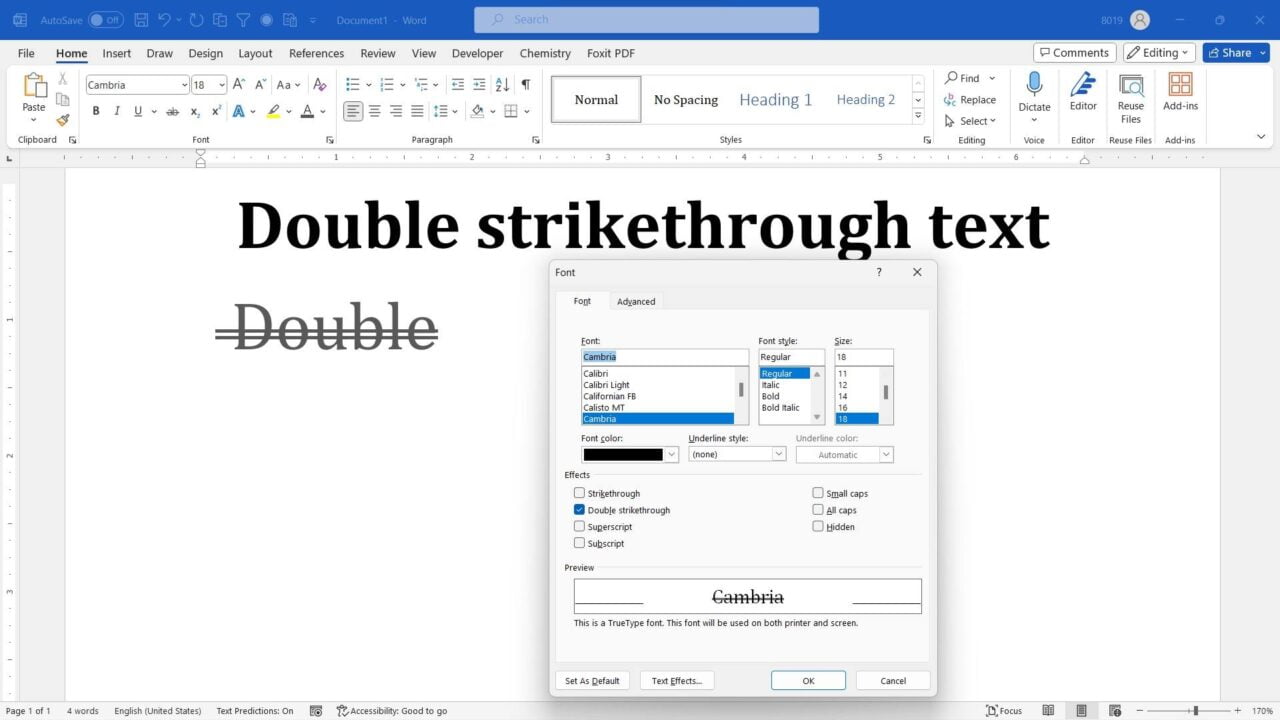
Quick answer: To apply double strikethrough in desktop Microsoft Word for Windows, select the text, press Ctrl+D to open the Font dialog, check Double strikethrough under Effects, and click OK. Unlike ordinary single strikethrough, double strikethrough draws two lines through the characters. This is formatting, not a tracked deletion.
Follow these steps in desktop Word for Windows:
- Select the text you want to apply double strikethrough to.
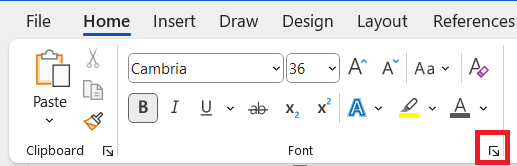
- Open the Home tab and select the small Font dialog launcher in the bottom-right corner of the Font group. On Windows, you can also press Ctrl+D

- In the Font dialog, select Double strikethrough under Effects. This applies two lines to the selected text, not two separate text styles.

- Click OK to apply the formatting. To format text you have not typed yet, set the effect with no text selected and then start typing; turn it off afterward to avoid affecting subsequent text.

The selected text now has two horizontal lines through it. Use double strikethrough for visual emphasis in a draft, but use Review → Track Changes when you need Word to record actual deletions and reviewer history.
Worked Example: Mark an Outdated Price Without Deleting It
Suppose a draft says “The annual fee is  150. Select only
 150” next to it with normal formatting. The two crossed-out lines are a visual draft convention—not a recorded revision. For a shared contract or a document that needs an audit trail, turn on Review > Track Changes before editing instead.
Verify the effect: Reopen the Font dialog with the crossed-out amount selected and confirm that Double strikethrough is checked. Then clear it and confirm the original characters remain editable. This test distinguishes formatting from actual deletion.
How to Remove Double Strikethrough
Select the affected text, open the Font dialog with Ctrl+D in Word for Windows, clear the Double strikethrough checkbox, and select OK. If the text still has a line through it, check whether ordinary Strikethrough is also enabled.
Troubleshooting
- Only one line appears: Open the Font dialog and select Double strikethrough, not the standard Strikethrough option.
- Ctrl+D does not open Font: Use the Font dialog launcher on the Home tab. Shortcuts differ between platforms.
- Deletion markup is visible: Review tracked changes separately; double strikethrough formatting does not accept or reject revisions.
Related: strikethrough shortcuts in Word and finding strikethrough text.
Frequently asked questions
Is there a keyboard shortcut for double strikethrough?
Word for Windows has no universally assigned single-key shortcut specifically for double strikethrough. Use Ctrl + D to open the Font dialog and choose the effect. A custom keyboard shortcut or macro may be possible in some desktop versions, but avoid confusing it with the shortcut for single strikethrough.
Does double strikethrough delete text or track a revision?
No. The characters remain in the document and may still appear in searches, copying, and accessibility tools. For collaborative editing, use Review > Track Changes so readers can identify proposed deletions and accept or reject them.
Can I use double strikethrough in Word for the web?
Editing controls differ between desktop Word and Word for the web. If the browser version does not expose the double-strikethrough effect, open the document in desktop Word to apply or remove it. Existing formatting may still display in the browser.
For current keyboard and formatting commands, see Microsoft’s Word shortcut reference. The availability of the double-strikethrough control can vary across desktop and browser versions.
Accessibility and document review
Do not rely on two strike lines alone to communicate that a passage is obsolete or rejected: the visual effect can be difficult to interpret, especially for screen-reader users. Add an explicit note such as “Removed in the revised version,” or use tracked revisions when editorial history matters.
Related Posts

C P Gupta is a YouTuber and Blogger. He is expert in Microsoft Word, Excel and PowerPoint. His YouTube channel @pickupbrain is very popular and has crossed 9.9 Million Views.