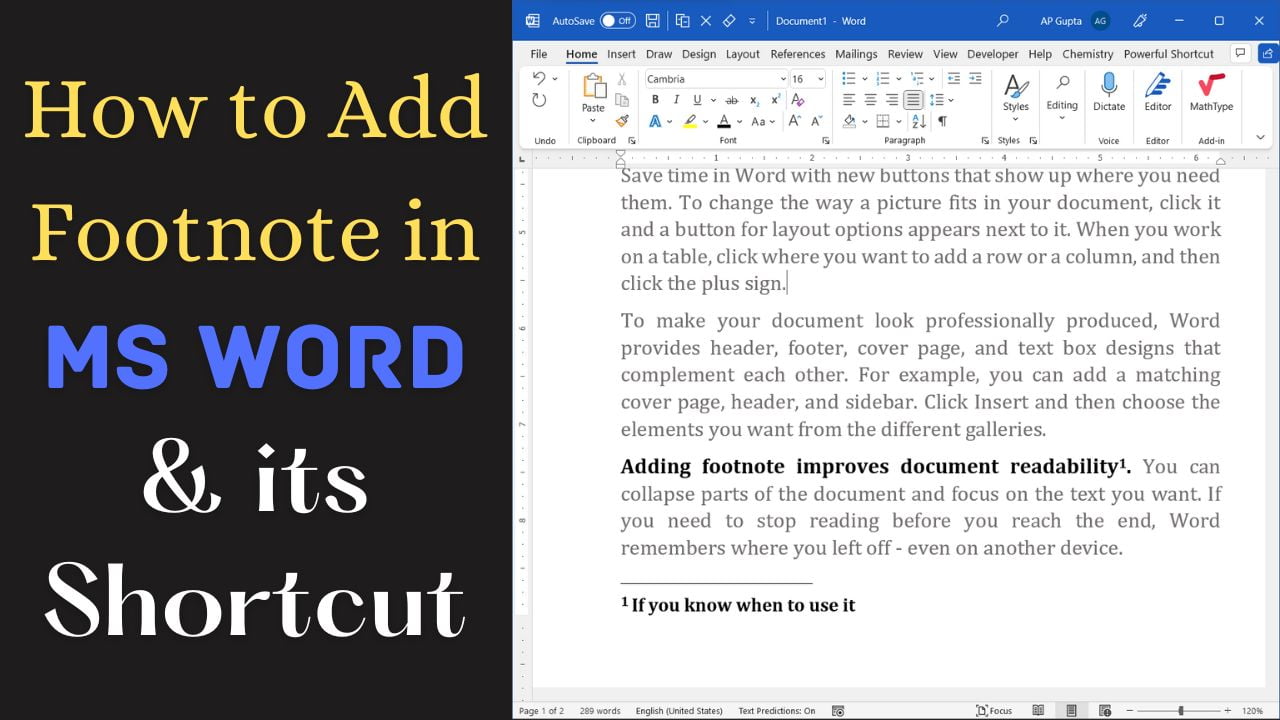
Use a footnote to add a citation or explanation at the bottom of a page in Microsoft Word. An endnote usually appears at the end of the document or section instead. The quickest desktop shortcuts are Ctrl + Alt + F (Windows) or Command + Option + F (Mac) for a footnote. For an endnote, use Ctrl + Alt + D on Windows or Command + Option + E on Mac.
Footnote vs endnote: what is the difference?
- Footnote: its reference number appears by the relevant text, and the note itself appears near the bottom of the page. Useful for citations and short explanatory notes.
- Endnote: its reference is in the document, but the note appears at the end of a document or section, which can keep pages less cluttered.
- Both: Word automatically numbers and manages these references. They are not ordinary typed superscript numbers, so adding or deleting notes normally updates the numbering.
Method 1: Insert a footnote from the References tab
- Place the cursor immediately after the sentence, quotation, or fact that needs a footnote. You usually do not need to select the whole sentence.
- On desktop Word, choose References > Insert Footnote.

- Word inserts a superscript reference mark at the cursor and moves the insertion point to a matching note area at the bottom of the page.
- Type your citation or explanation. Click in the document body to continue writing.
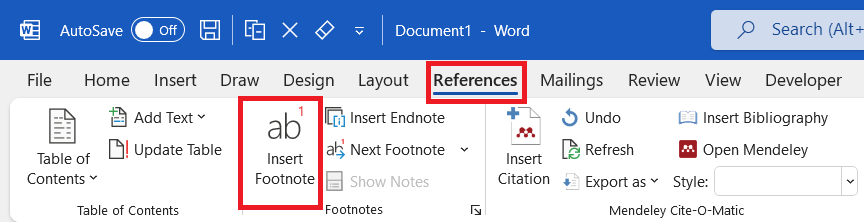
Word for the web: use References > Insert Footnote while in Editing mode. Microsoft’s current instructions show the References tab in Word for the web too. If your ribbon displays a different layout, look for the Footnotes commands under References. Microsoft: Add footnotes and endnotes.
Method 2: Insert a footnote or endnote with a shortcut
| Action | Word for Windows | Word for Mac |
|---|---|---|
| Insert a footnote | Ctrl + Alt + F | Command + Option + F |
| Insert an endnote | Ctrl + Alt + D | Command + Option + E |
Place the cursor after the passage, then press the keys together. Word inserts the note marker and opens the note area. Function keys and customized shortcuts can differ on some computers; if the combination is intercepted, use References > Insert Footnote or Insert Endnote from the ribbon.
Correction to older shortcut lists: On Word for Windows, the documented endnote shortcut is Ctrl + Alt + D, not Ctrl + Alt + E. Microsoft’s current Word keyboard shortcut reference confirms both Windows and Mac combinations.
Method 3: Insert an endnote from the ribbon
- Click after the text that needs a reference.
- Open the References tab and choose Insert Endnote.
- Enter the note at the end of the document or section, according to the document settings.
Example: Adding a source citation
Suppose a report says, “The experiment was repeated three times.” Place the cursor after the sentence, insert a footnote, and enter the source or an explanatory note, such as See the laboratory protocol for the full procedure. Word manages the reference mark and matching note. Use the citation style required by your university, publisher, or workplace.
How to change numbering and footnote formatting
In desktop Word, open the References tab and the Footnotes dialog launcher (where available) to choose a number format, starting number, and whether numbering restarts by section or page. Word for the web provides more limited formatting tools, which Microsoft documents in its help article. Always check the exact options in your edition.
Footnotes use dedicated Footnote Text and reference styles. You can change their typography through Word styles, rather than manually formatting each note separately. For a thesis or academic report, check your required style guide before changing separators, spacing, and numbering.
How to delete a footnote correctly
Delete the footnote reference mark in the body text, not just the note text at the bottom of the page. Word will remove the associated note and renumber the remaining notes. If you only erase the note text, the reference number can remain with an empty footnote.
Troubleshooting
- The footnote is on a different page: check the reference mark’s placement, pagination, and paragraph formatting; Word places the footnote with the relevant page according to available space.
- The shortcut does not work: confirm you are in desktop Word, check your keyboard layout, or use the References tab command.
- The note number restarts unexpectedly: review the footnote numbering settings, especially in documents with section breaks.
- The text looks too small: update the Footnote Text style so all notes use consistent formatting.
- You need the same source more than once: consider a cross-reference or your required citation workflow rather than copying a footnote number manually. See our tutorial on referring to the same footnote again.
Frequently asked questions about Word footnotes
Can I convert footnotes into endnotes?
In desktop Word, open the Footnote and Endnote settings from the References tab and look for the Convert command. Make a copy of the document first, especially when working with a thesis, because converting notes changes their placement and can affect page layout. Some web editions do not expose the full conversion controls.
Why does my footnote number appear twice?
Check whether a second note was inserted instead of a cross-reference to the original note. To cite the same existing note again, use References > Cross-reference where supported and select the footnote reference; avoid manually typing another superscript number because it will not update with renumbering.
Do footnotes replace a bibliography?
Not necessarily. Citation rules vary: some styles use notes plus a bibliography, while others prefer in-text author–date citations. Follow the required academic or publisher style rather than assuming Word’s footnote feature creates a complete reference list.
Summary
Footnotes are added from References > Insert Footnote or a keyboard shortcut: Ctrl + Alt + F on Windows and Command + Option + F on Mac. Endnotes use Ctrl + Alt + D (Windows) and Command + Option + E (Mac). Let Word manage the numbering automatically, and delete note reference marks—not just note text—when removing a citation.
Related Posts

C P Gupta is a YouTuber and Blogger. He is expert in Microsoft Word, Excel and PowerPoint. His YouTube channel @pickupbrain is very popular and has crossed 9.9 Million Views.