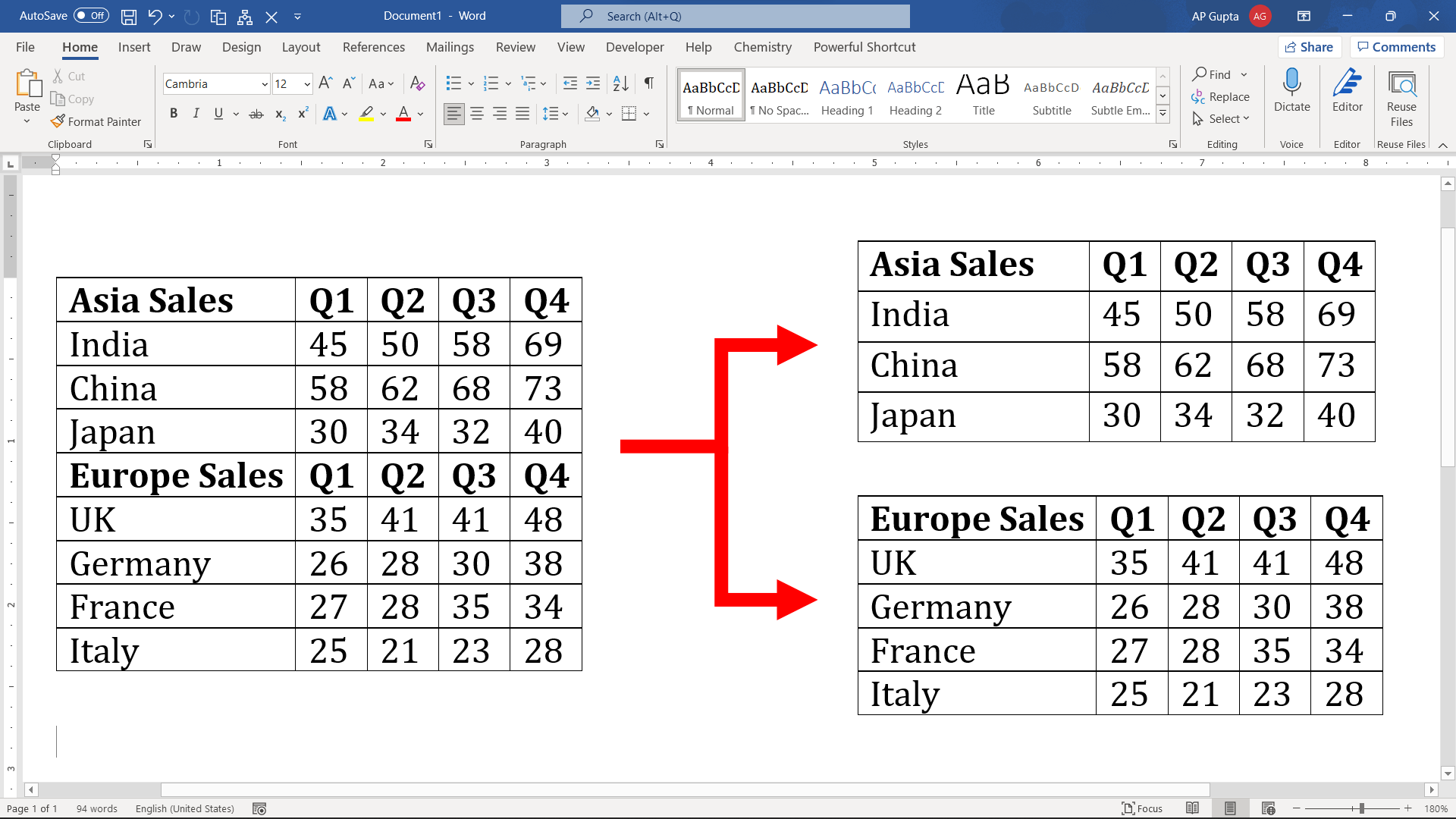
Quick answer: To split a table into two tables in desktop Microsoft Word, click in the row that should become the first row of the second table. Then choose Table Layout → Split Table. Word inserts a paragraph between the two tables. This splits the table horizontally between rows, not vertically into separate sets of columns.
Method 1: Use the Split Table Command
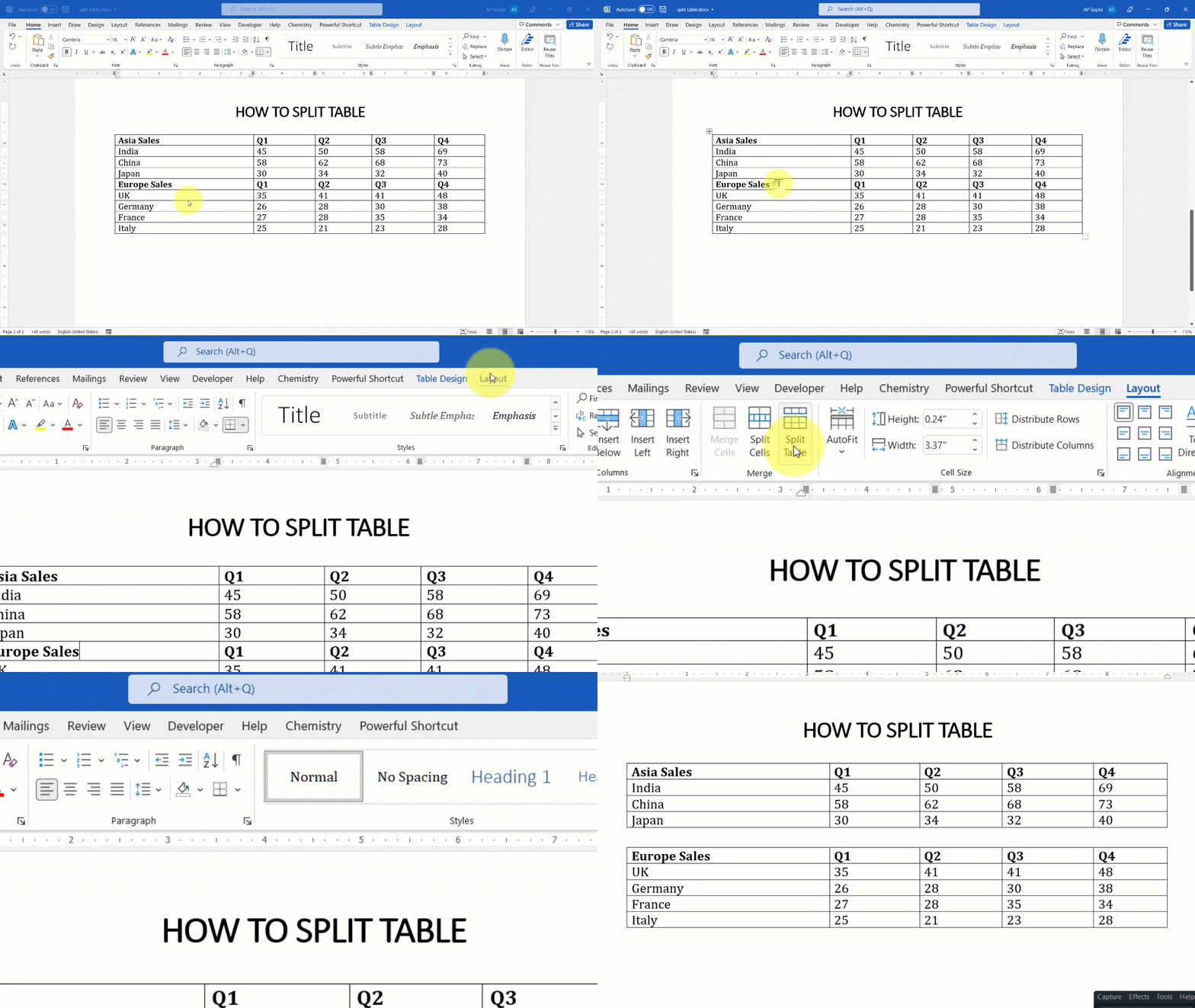
Follow these steps to split a table into an upper and a lower table:
- Click in any cell of the row that should begin the second table. The rows above it remain in the first table.
- Open the contextual Table Layout tab and choose Split Table. In some Windows versions, a sequence of ribbon KeyTips can access this command, but the letters can vary with the Word version and interface language. Follow the KeyTips shown after pressing Alt rather than relying on a fixed sequence.
Method 2: Move Table Rows with the Keyboard
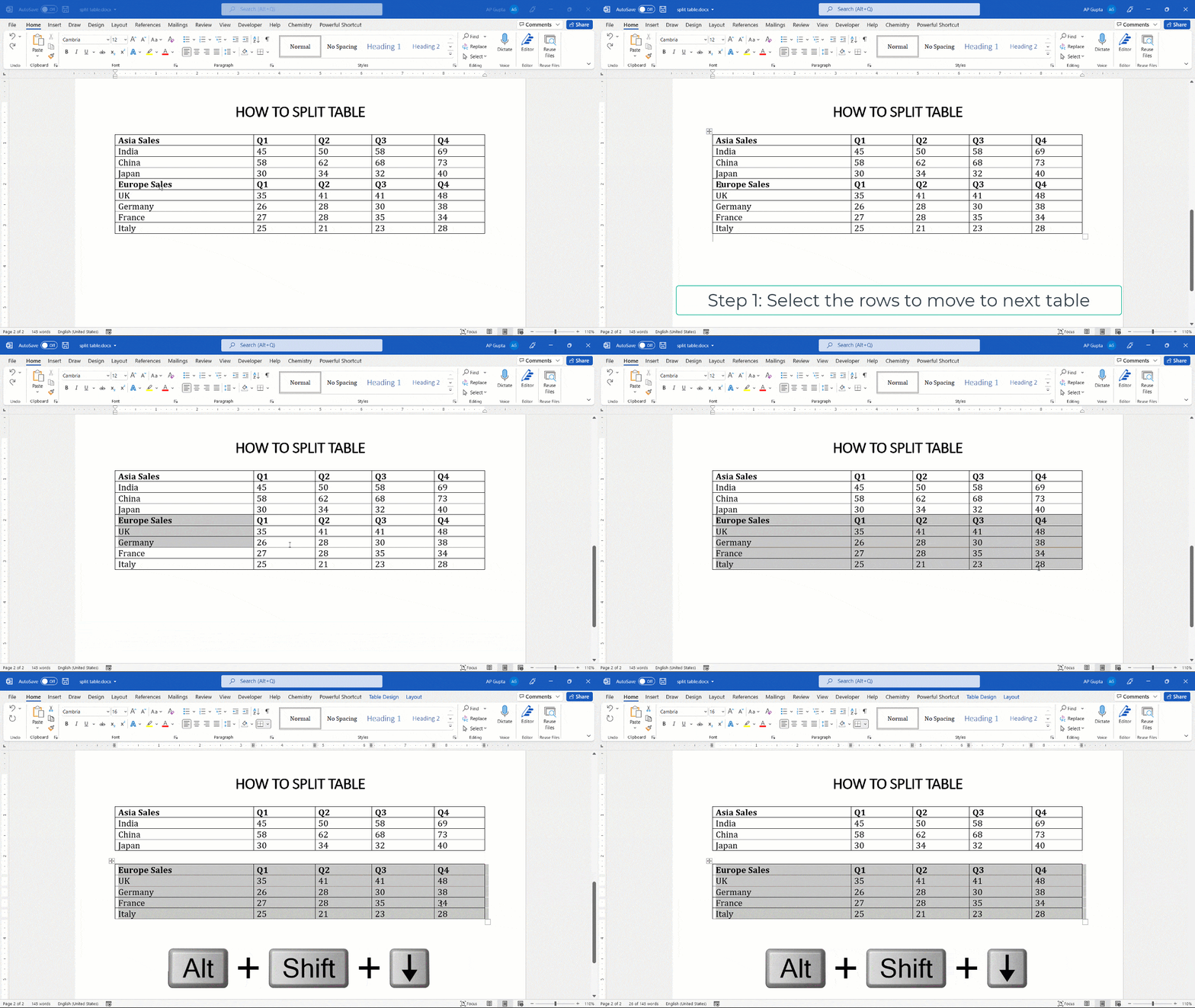
Important distinction: Alt+Shift+Down Arrow is primarily a command for moving selected paragraphs or table rows down. It is not a universal shortcut for Split Table and may reorder rows instead of splitting the table. Use the Split Table command for predictable results.
- Select the rows you want to move. Work on a copy of the document if you are experimenting with keyboard row movement.
- Press
Alt+Shift+Down Arrowin desktop Word for Windows to move the selected row or rows downward where supported. If you need two separate tables, use Table Layout → Split Table instead.
Video Demonstration
Watch the original demonstration below. Note that Word’s row-moving shortcut and the dedicated Split Table command serve different purposes.
Example: Split a Six-Row Table After Row Three
Suppose your table has six rows and you want rows 1–3 in the first table and rows 4–6 in the second. Click anywhere in row 4 and choose Table Layout → Split Table. Word creates a paragraph between the two tables. You can type a heading in that paragraph or adjust its spacing.
Practice: Check the Result Before Sharing
Create a three-column table with the headings Item, Owner, and Status, followed by six data rows. Put the cursor in the fourth data row (the fifth row if the headings are included), then use Table Layout → Split Table. The first table should contain the header and the first three data rows; the second should contain the remaining three data rows. This checks that the split happened above the selected row rather than below it.
If both tables need column headings, insert or copy an appropriate header row into the lower table and mark each table’s first row as a header where applicable. Do not assume Word automatically duplicates the header. For an accessible document, keep tables simple, avoid merged cells used solely for layout, and add a descriptive heading before each table. Save a copy, reopen it, and check reading order and page breaks in the exported PDF.
Mac and browser note: In desktop Word for Mac, select a cell in the intended first row of the second table and look for Split Table under contextual table-layout controls; tab names may vary. Word for the web may not expose the same table commands, so open the document in desktop Word if Split Table is unavailable. A page break does not create two independent tables.
Troubleshooting Split Tables in Word
- Split Table is greyed out: Click inside an ordinary Word table, not outside it or in a floating text box.
- The wrong row starts the second table: Undo with Ctrl+Z, then click in the intended first row of the lower table.
- The tables merge again: Keep a paragraph mark between them. Turning on Home → ¶ makes it easier to see that separator.
- You want to prevent a row from breaking across pages: That is a separate setting under Table Properties → Row.
Related: keep a Word table together on one page.
Frequently Asked Questions
Can I split a table into two side-by-side tables?
Split Table separates rows into an upper and a lower table. For side-by-side tables, create two separate tables and place them in columns or suitable layout containers; consider accessibility and reading order when using complex layouts.
How do I undo a table split?
Immediately press Ctrl+Z (Windows) or Command+Z (Mac). If you have already made other edits, show paragraph marks and carefully remove the separating paragraph between the two tables; Word may merge them if their layouts are compatible. Save a copy first when the tables contain complex formatting.
Does Split Table keep header rows and column widths?
The split normally retains the existing cells and their formatting, but a repeated header row in the original table may not automatically become the header of the new lower table. Check Table Layout → Repeat Header Rows in each resulting table and verify widths and pagination before printing.
Related Posts

C P Gupta is a YouTuber and Blogger. He is expert in Microsoft Word, Excel and PowerPoint. His YouTube channel @pickupbrain is very popular and has crossed 9.9 Million Views.