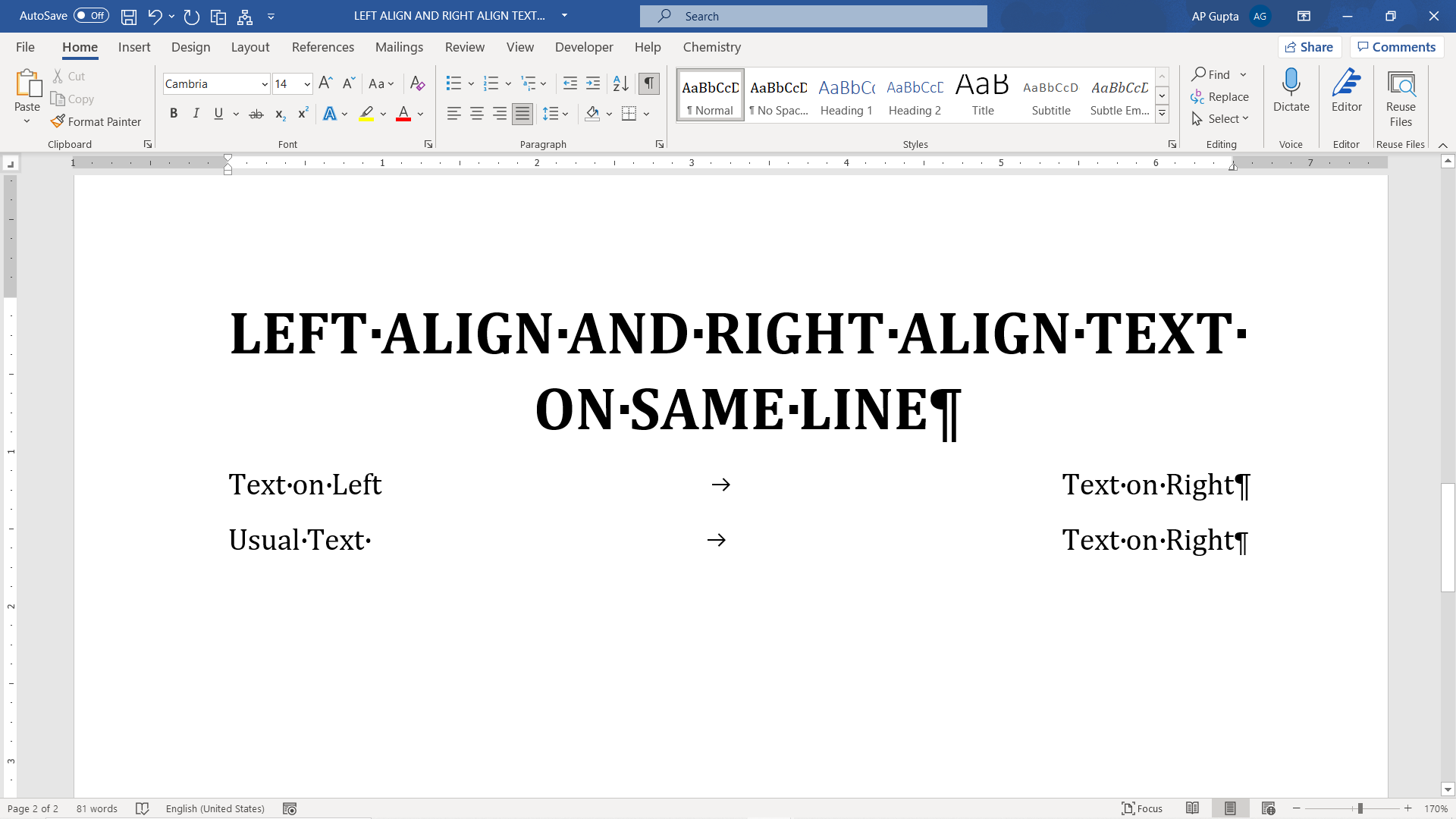
Quick answer: Use a right-aligned tab stop to put text on the left and right of the same Word paragraph. Turn on View → Ruler, choose a right tab stop, set it near the right margin, type the left text, press Tab, and type the right text. Set a right-aligned tab stop using the ruler 1: Make sure the “Ruler” is visible. Navigate to View Tab and check the box… Read More »Align Text Left and Right on the Same Line in Word

Microsoft Word
Microsoft Word also known as Ms Word is one of the office productivity applications included in the Microsoft Office suite. It is one of the most preferred Word processors. Our blog is dedicated to make use of Word simple, easy and efficient. It covers Tips and Tricks to use Ms Word for creating report, thesis and dissertation, equation and more.
Quick answer: If Microsoft Word selects an entire paragraph when you drag across its end, try disabling When selecting, automatically select entire word in File → Options → Advanced → Editing options (Windows desktop). This affects automatic word selection; paragraph-mark selection and mouse behavior can still vary. Turn off automatic whole-word selection in Word for Windows In desktop Word for Windows, select File > Options. Choose Advanced in the left… Read More »Stop Word from Selecting Too Much Text: Smart Paragraph Selection
Stop Word from Selecting Too Much Text: Smart Paragraph Selection
Quick answer: In desktop Word for Windows, type 03C0 then press Alt+X for lowercase π. Type 03A0 then Alt+X for uppercase Π. You can also use Insert → Symbol or insert π inside an equation. Method 1: Type π and Π with Math AutoCorrect Inside a Word equation, type \pi and press Space to convert the command to lowercase π. Math AutoCorrect outside equations requires the optional setting described below;… Read More »How to Type Pi (π or Π) in Microsoft Word: Shortcuts and Symbols
How to Type Pi (π or Π) in Microsoft Word: Shortcuts and Symbols
Quick answer: To update many Word fields in the main document, press Ctrl+A followed by F9 in desktop Word for Windows. This updates selected fields, including many cross-references and tables of contents, but may not cover fields in headers, footers, text boxes or other document stories. This guide explains how to update fields reliably, why some fields are skipped, and what to check before distributing a long document. Different ways… Read More »Update All Fields in Word: TOC, Captions and Cross-References
Update All Fields in Word: TOC, Captions and Cross-References
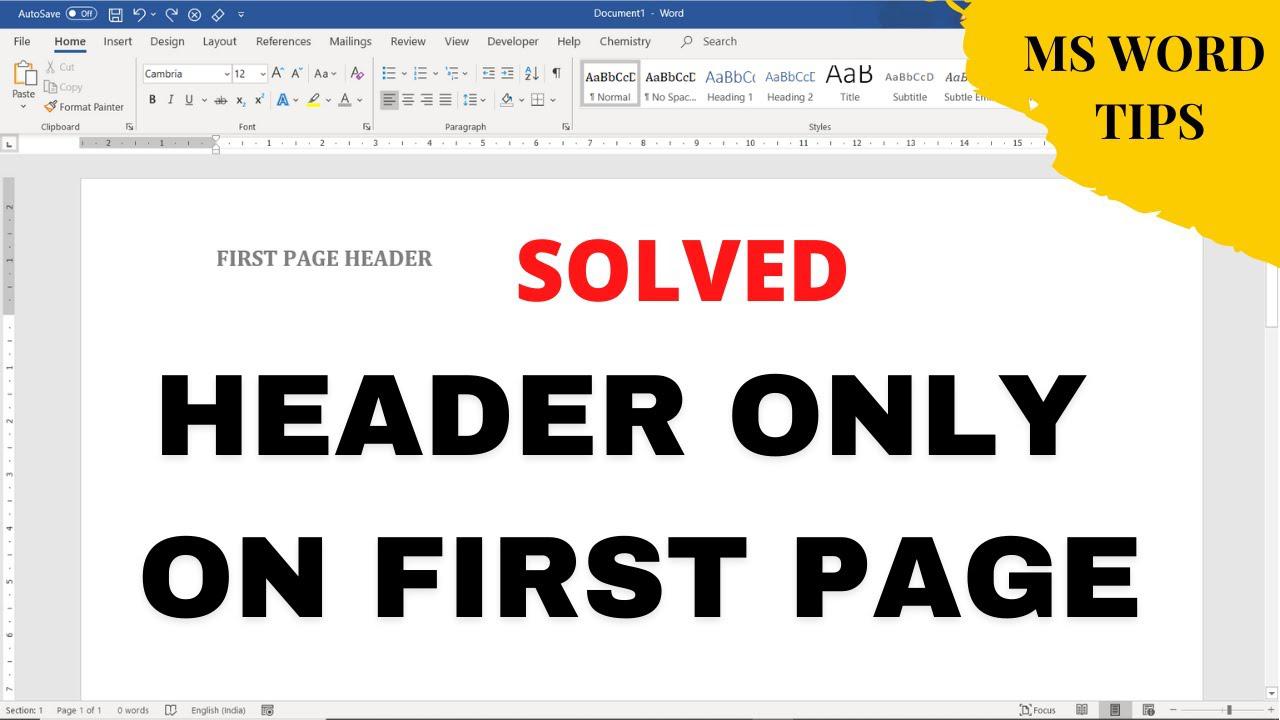
Quick answer: Open the header, enable Different First Page, and put the desired content in the first-page header. Leave the regular header blank so later pages do not repeat it. Steps to Insert Header Only on First Page The following method is described in Microsoft’s support guide for supported Word versions. Ribbon labels may differ between Windows, Mac and the web; use desktop Word for the fullest header and section… Read More »How to Show a Header Only on the First Page in Word
How to Show a Header Only on the First Page in Word
Greek alpha appears in mathematics, statistics and science. This guide shows how to insert lowercase α and uppercase Α in Word without confusing them with Latin letters. Method 1: Type \alpha in a Word equation In desktop Word, press Alt+= to insert an equation, type \alpha, then press Space to convert the command to α. Math AutoCorrect works inside equation regions by default; in Word for Windows you can optionally… Read More »How to Type Alpha (α and Α) in Word: 4 Reliable Methods
How to Type Alpha (α and Α) in Word: 4 Reliable Methods
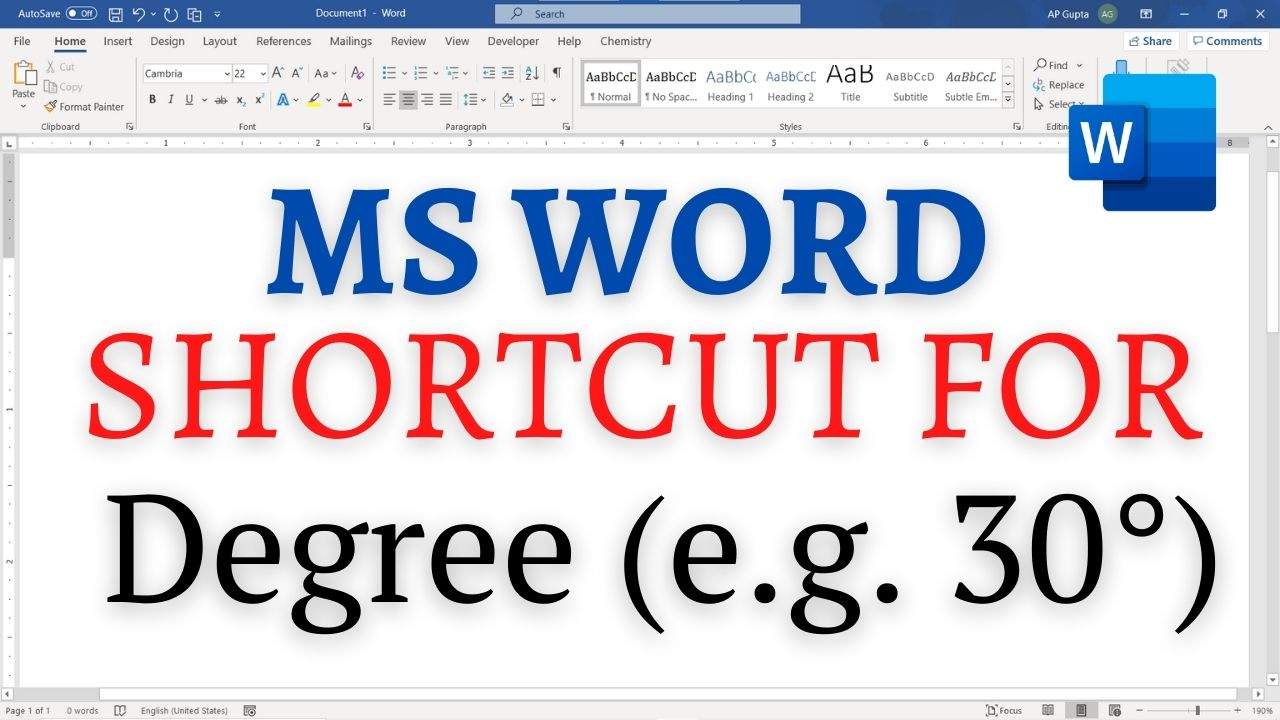
Need the degree sign for 25°C or a 90° angle? Insert the real degree symbol ° (U+00B0), not a superscript letter o. Fastest ways to insert the degree sign in Word Windows desktop Word: type 00B0 and press Alt+X to convert the Unicode hexadecimal code to °. Alternatively, press Alt+0176 on the numeric keypad with Num Lock enabled. Mac: press Option+Shift+8 to insert ° in most keyboard layouts. In any… Read More »Degree Symbol (°) in Word: Windows and Mac Shortcuts
Degree Symbol (°) in Word: Windows and Mac Shortcuts
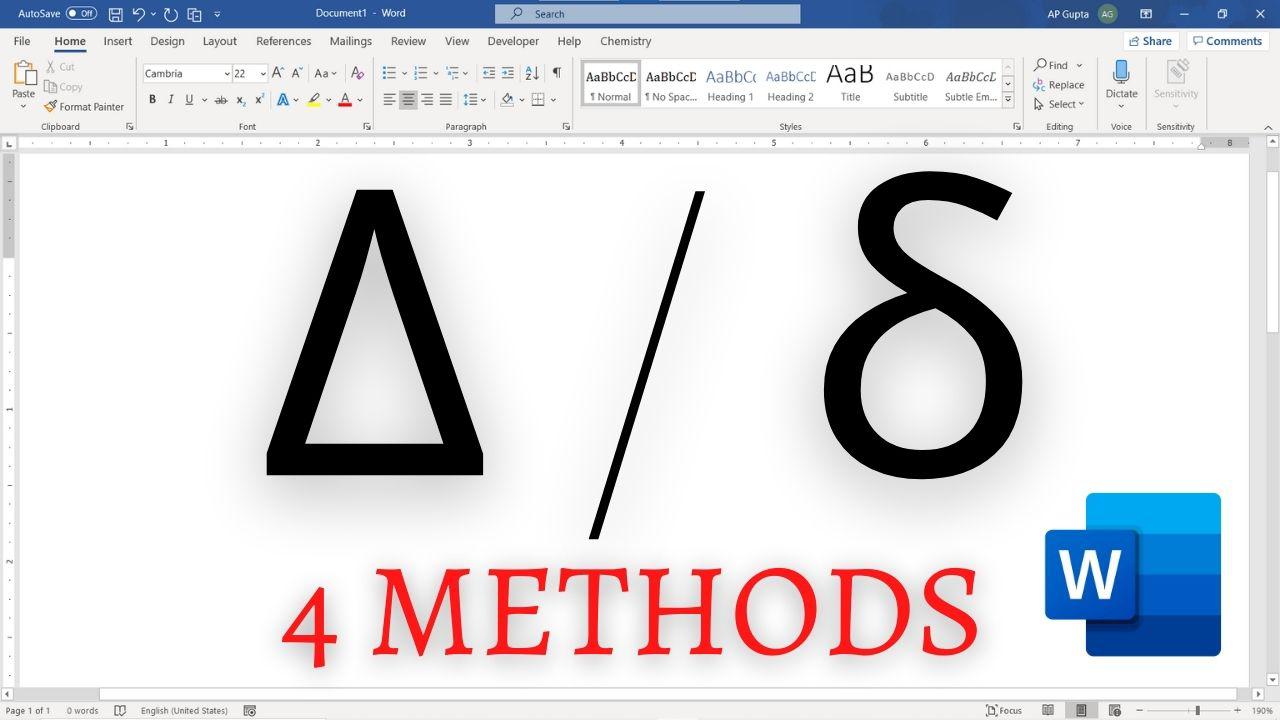
Greek delta has two forms: uppercase Δ (U+0394) and lowercase δ (U+03B4). Use the correct form in scientific and mathematical documents. Methods to type Delta in Word The methods below cover equation input, the Symbol dialog, Unicode Alt+X on Windows, and legacy keypad codes. For most users, the first three are more reliable. Quick reference: uppercase delta is Δ (U+0394); lowercase delta is δ (U+03B4). These are Greek letters, not… Read More »How to Type Delta (Δ and δ) in Word: Unicode and Equation
How to Type Delta (Δ and δ) in Word: Unicode and Equation
Quick answer: Choose Insert → Shapes → Oval and hold Shift while dragging to draw a circle. For exact dimensions, set the same Height and Width under Shape Format. Draw a Perfect Circle in Word or PowerPoint Open Insert > Shapes and choose Oval (under Basic Shapes). Click and drag on the page or slide. Hold Shift while dragging to constrain the oval to a circle. Release the mouse button… Read More »How to Draw a Perfect Circle in Word or PowerPoint
How to Draw a Perfect Circle in Word or PowerPoint
Learn to insert reaction and equilibrium arrows in Word and choose the right symbol for a chemical equation. How to insert reaction and equilibrium arrows in Word Four ways to insert arrows are Insert > Symbol, Math AutoCorrect in equations, Unicode Alt+X on Windows, and legacy numeric-keypad Alt codes. For reproducible symbols, use the Symbol dialog or Unicode Alt+X on Word for Windows. Method 1: Insert > Symbols It is… Read More »Reaction Arrows in Word: →, ⇌ and ⇄ for Chemistry